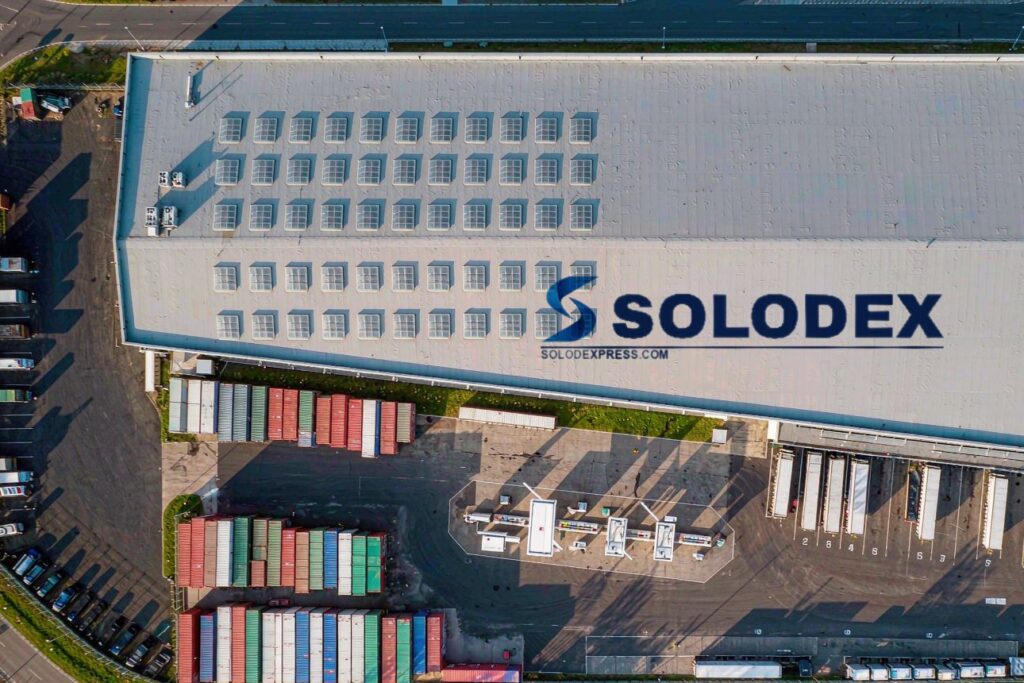
The vessel berths at 06:40 and the container is on the quay by eleven. It is now about two hundred metres from the water and, in every sense that matters commercially, still six signatures away from you. Between that quay and your loading dock the box will change hands six times, and each handover has its own clock, its own free time, and its own way of stopping everything downstream.
Most of the money lost in this stretch is not lost to delay. It is lost because nobody was watching which clock was running. A container sitting in a terminal is not “waiting” in some general sense — it is inside a specific free-time window that started on a specific day, and when that window closes, the meter starts and does not stop until somebody physically moves the box.
Six gates, six clocks
The sequence is fixed, and it is worth learning once because every import problem is a failure at one of these gates. Note that the clocks are not the same length, are not all paid by the same party, and do not all start on the same day.
| Gate | Who holds the box | What it needs | Typical free time |
|---|---|---|---|
| Carrier release | The line | Original bill of lading, or a telex release, or freight paid | None — this is a document gate |
| Customs clearance | Customs | Entry, duty paid, and no exam selected | None, but storage is running |
| Terminal availability | The terminal | The box to be grounded and the release to be in the system | 3–5 days from discharge |
| Truck appointment | The terminal again | A slot, which is scarce when the yard is full | Days, not hours |
| Chassis | The pool | A roadworthy chassis in the right place | Billed per day from pickup |
| Receiver’s dock | Your customer | A door, a forklift and someone to sign | Can reject the delivery entirely |
The first gate is the one that surprises new importers, because it is not a physical constraint at all. A negotiable original bill of lading is a document of title: the carrier will not release the cargo without it, and if the original is still in a banking chain because payment is documents-against-payment, then nothing else on this list can begin. Boxes have sat for three weeks at a fully functioning terminal with the vessel long gone, because a piece of paper was in a courier’s bag.
The clocks run in series, not in parallel
The most common misconception in this part of the business is that demurrage and detention run at the same time. They do not, and the difference decides which one you are actually paying.
Demurrage is charged for the container sitting inside the terminal after its free time expires. Detention is charged for the container sitting outside the terminal — on your chassis, at your yard — after its own free time expires. One ends where the other begins. So a delay does not double the charge; it pushes the whole sequence later, and the total is the sum of two separate overruns rather than one.
That matters because the two have very different daily rates and very different negotiating positions. Terminal storage at a congested port might run $150 to $350 a day depending on the tariff and the size of the box; chassis per diem might be $25 to $45; and detention after free time is usually the most expensive of the three per day, because it is priced to make you return the asset.
| Charge | Starts when | Typical daily rate | Ends when |
|---|---|---|---|
| Terminal storage, demurrage | Free time from discharge expires | $150–350 per day | The box leaves the gate |
| Chassis per diem | The chassis is picked up | $25–45 per day | The chassis is returned |
| Container detention | Free time after gate-out expires | $80–200 per day | The empty is returned |
| Rail ramp storage | Free time at the inland ramp expires | $50–120 per day | The box is collected |
| Exam fee and devanning | An exam is selected | Flat $300–800 plus labour | When the box is released |
The demurrage and detention distinction is worth more than the definitions: because the charges attach to where the box is standing, whoever controls that position controls the bill — and in a chain with six handovers, that changes twice before the cargo reaches a dock.
Run the arithmetic on a customs exam and it becomes obvious why the exam is the expensive event and not the freight. Eight days lost at the terminal against a five-day free time is three days of storage, around $750. The delivery appointment is now missed, which costs another two days before a truck returns, and the chassis has been sitting through all of it. None of these numbers is large individually. Together they routinely exceed the ocean freight on the box.
Who pays depends on where the box is standing
Under a delivered-terms sale the seller owns almost every clock on that list, which is why a DDP price that looks generous can quietly lose money on a bad week at the terminal. Under a sale that ends at the destination port, the buyer owns them — but the seller often still books the drayage because they have the forwarder relationship, and then nobody is sure who is supposed to be watching.
The ambiguity has a predictable cost. When a charge has two possible owners, it usually waits until it is large enough that somebody notices, and then it is argued rather than managed. The fix is not a legal one: write down, on the booking, which party owns the storage clock, the detention clock and the chassis clock, and name the person on each side who will be told when one is within two days of expiring. It reads like bureaucracy and it is the cheapest paragraph in the whole transaction.
The three things that stop everything
Most delays are incremental. Three are absolute, in the sense that no amount of calling will move the box until a specific thing happens.
A customs exam. A non-intrusive scan takes a day or two. Anything more becomes a damage question as well, because an intensive exam means the box is devanned and repacked by people who are not your packer. A full intensive exam — the container devanned, every carton handled, then repacked — takes five to ten days and is charged to you, on top of the storage. The exam is not appealable in any practical sense, and it is selected by a risk system you cannot see. What you can control is whether the entry is clean enough not to be selected, which is the argument for the classification and valuation discipline described elsewhere rather than for a better relationship with anyone.
The absence of a truck slot. When a terminal yard is full, appointments disappear before the boxes do. This is the same signal that shows up in a congestion cycle two weeks before the statistics do, and it is the reason a container can be “available” for a week without moving.
The chassis. In markets where the chassis is not part of the tractor, the box is only movable when a roadworthy unit is in the right place. Pools run short in exactly the weeks when everyone is trying to move containers, which is the same weeks as the shortage of slots.
Everything else — the release, the entry, the dock appointment — is administrative and can usually be fixed within a day by somebody who knows which office to call.
The rail ramp is a fourth kind of waiting
For inland destinations the box does not go from the quay to a truck. It goes to a rail ramp, waits for a slot on a train, travels for five to ten days, and then waits again at the destination ramp for a chassis and a driver. That is two more handovers and two more free-time windows, and the second one is where containers go quiet.
A ramp is a yard with a schedule attached, and the schedule is not yours. Trains are built by destination and by weight, and a single box that missed its block waits for the next one, which may be tomorrow or may be Thursday. The container is safe, tracked, and completely immovable, and the storage clock at the destination ramp starts on its own terms. Sellers who ship to the interior and price on the ocean leg alone are usually surprised by this segment, and the surprise arrives as a bill that is larger than the drayage they budgeted for.
“It’s at the port” is not a status
Carriers publish container events, and the sequence is precise: discharged, then available, then gate out, then empty return. The word that people use on the phone — “it’s at the port” — collapses three different states into one, and the three have completely different consequences.
Discharged means the box is off the vessel and in the yard, possibly not yet grounded in a retrievable position. Available means the terminal has it in a block and the release is in the system, so a truck with an appointment can take it. Gate out means it is on a chassis and the detention clock has started. A container that is discharged but not available cannot be collected by any truck, at any price, on any day — and it is worth knowing which of those three states you are in before you call anyone.
This is also where a forwarder earns their fee or does not. The good ones track the event code rather than the ETA, and they tell you on the day the vessel berths whether the release is in hand, because that is the only gate where the delay is entirely preventable and entirely within the shipper’s control.
What to have ready before the vessel arrives
Five things, all of them boring, all of them eliminating a class of delay.
- The bill of lading decision, made before sailing. Original, telex release or sea waybill — and if the answer is “original”, know where it will be on the day of discharge.
- The entry filed, not drafted. Classification, value and origin settled in advance — the discipline in the document check — so the only remaining question at arrival is whether an exam is selected.
- A delivery order and a truck appointment attempted on day one, not on the day the free time is about to expire.
- The chassis arranged with the drayage, not after it. Ask who provides it and what the daily rate is; the answer changes the cost of a two-day delay.
- A named person on your side who owns the clock. Not “the forwarder” — a person, with the free-time expiry date in their calendar, who is expected to escalate on the day it is at risk rather than the day after.
None of this is complicated, and all of it is upstream of the moment when it becomes urgent. The box does not care about any of it; it sits on the quay, two hundred metres from the water, waiting for six signatures and one appointment. The only variable is how many of those six were arranged before it arrived.
The first of the six gates has its own bottleneck, and it is not at the terminal: nothing moves until the carrier issues a release, and the release waits on paper nobody in the receiving office controls.
Each of the six gates bills something, and the names do not tell you who: the invoice header matters more than the amount, because it tells you which contract the charge belongs to.
Six gates and six clocks take over once a box is on the quay; the fourteen hours before that first gate are a different story, because one vessel ETA becomes twelve separate discharge timestamps.
Six gates and six clocks take over once a box is on the quay; before the first of those gates, the grounding position decides whether a released box can actually be reached.
Six clocks and six handovers take over once a box is on the quay; at the load end, the clock that decides when a box can sail is the numbered call it was booked against.
Discharged, available, gate out, empty return is the precise sequence at destination; at origin there is an earlier sequence, empty release, inspection and loaded gate-in, that no discharge record will ever show.
Six gates and six clocks describe what runs after discharge; which two of those clocks a report subtracts decides whether the same box shows nine, fourteen or seventeen days.
Discharge begins a different set of steps for the goods; for the vessel it also clears a container number from one socket ID, leaving the outlet on the free list with the same circuit and rated load.


