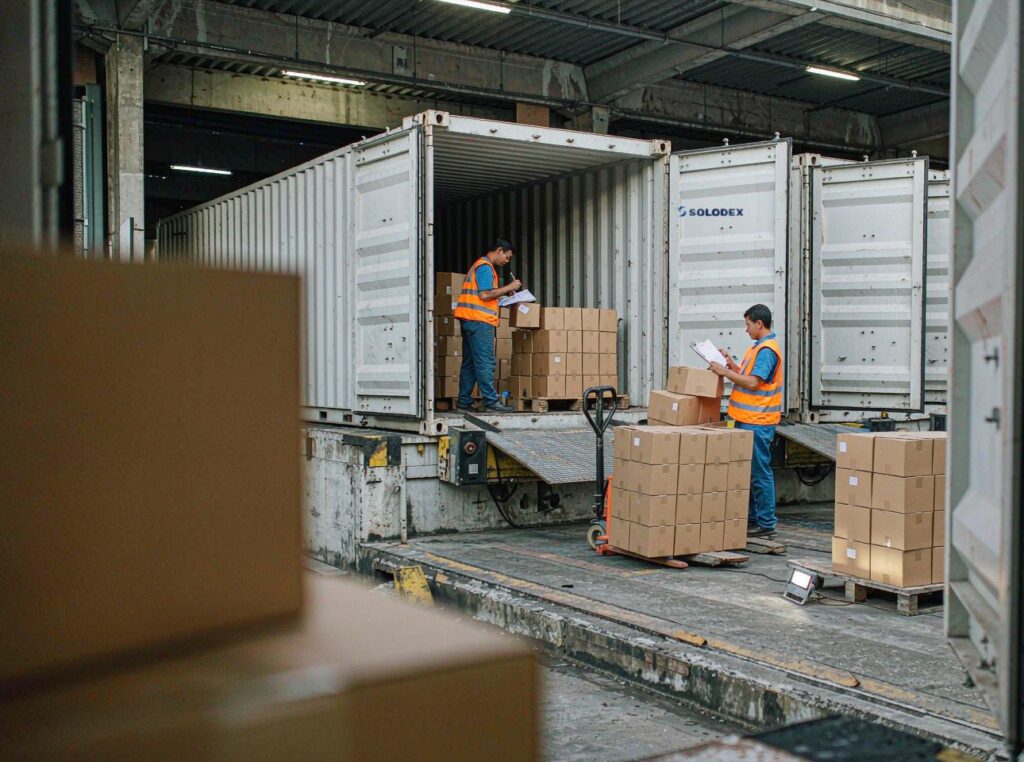
The container gated out of the terminal at 07:40. By 07:55 the forwarder’s phone was ringing: the box is released, when can we collect? The honest answer was not a date. It was a question back — which shipment do you mean? The container held twelve consignments from twelve shippers, and not one of them was collectable that morning. The box was out. The goods were not.
This is the moment consolidation customers meet most often and understand least. Every tracking screen in the chain will eventually say released, and every one of those screens will be telling the truth about a different object. The terminal released the container. Customs released the declaration. Neither event released a single consignment, because consignments are not released at all — they are handed over, one signature at a time.
Two Lists, Never Merged
Everything confusing about this week of the shipment’s life comes from one fact: the industry keeps two release lists, and they never merge into one.
The box-level list is short. Customs clears the consolidated entry, the terminal collects its charges, the container gates out. Three events, all recorded against the container number, all visible on public or semi-public status screens. When all three are green, every stakeholder who only watches the container believes the job is done.
The consignment-level list is long, and it is not public. For each of the twelve consignments inside, somebody must confirm the deconsolidation manifest matches the house bills, sign or issue a delivery order, settle the local charges attached to that consignment, and physically collect the goods. Twelve consignments means twelve copies of that sequence, each on its own clock, none of them triggered automatically by the container’s gate-out.
The two lists share one document — the deconsolidation manifest that maps the container’s contents to the house bills — but sharing a document is not sharing a status. The manifest tells the freight station what should come out of the box. It says nothing about which consignment is ready.
Why a Box-Level Release Cannot Propagate
It is worth being precise about why the release does not flow down from container to consignments, because customers reasonably assume it should.
A customs release attaches to a declarable unit. For a consolidated container, that unit is the consolidated entry — one declaration covering the box, built from the master house bills. The release says: this box, as declared, may leave. It does not and cannot say: the four cartons of house bill 7 may leave, because house bill 7 was not the unit declared. The consignment-level counterpart is the delivery order, and a delivery order is not a customs instrument at all. It is a handover instruction from the holder of the goods to the receiver, one per consignee.
The same is true on the terminal side. The terminal’s release — out-gate permission, charge settlement — attaches to the equipment. A container does not leave the yard in twelve pieces. So the terminal never had a per-consignment status to propagate in the first place. The goods stopped being terminal cargo the moment they were unpacked; from then on they are freight-station inventory, and inventory is tracked by house bill.
This is the structural reason: the box clears as one declarable, movable unit; the consignments become collectable as N handover events. No system joins the two because legally and physically they are different objects.
The Four Delays Between the Two Lists
Between the container’s gate-out and the first collectable consignment, four delays run in sequence or in parallel, and customers who budget none of them are surprised by all of them.
Unpacking queue. The container must be physically stripped before any consignment exists as separate, accessible cargo. At a busy freight station the box may sit a day or two in the queue behind other containers. Until it is stripped, no consignment can be produced, inspected or handed over, however green the box-level screens look.
Manifest reconciliation. When the strip happens, the station checks what came out against the deconsolidation manifest. A short-landed pallet, a damaged carton, or a piece count that disagrees with the house bill stops that consignment — only that consignment — while the discrepancy is resolved. This is the first moment the twelve clocks diverge from each other.
Delivery order issuance. Each consignee (or its agent) presents identity and documents, settles the consignment-level charges, and receives a delivery order. The delivery order is the instrument that converts a claim into a collection, and it is issued per consignment, per presentation. Nothing issues it automatically.
Collection appointment. The consignee’s truck arrives in the station’s collection windows, collects against the delivery order, signs. The signature closes that consignment’s list. Twelve signatures, twelve times.
Box released at 07:40 Monday; first consignment collectable Tuesday afternoon; last consignment collected Thursday. That spread is normal, not negligence — it is the four delays running per consignment.
What Each Party Sees on Its Own Screen
The practical trouble comes from each party reading a different list and each being correct.
The shipper sees the container released and tells its customer the goods are available. The forwarder sees the same and confirms. The freight station sees eleven consignments not yet claimed and one delivery order outstanding. The consignee, phoning the station, is told the goods are not ready — and hears a contradiction where there is none.
Nobody in this exchange is wrong. They are reading different objects. The vocabulary failure is expensive: it produces promises that cannot be kept and blame that has no target. The fix is boring and works — stop saying “released” without an object. The box is released. Which consignment is collectable? As of when? Those are two questions and deserve two answers.
A Worked Example: Twelve Consignments, One Morning
Take the 20-foot box from the opening. Twelve house bills, consolidated at the origin into one container, one consolidated entry, one gate-out.
| Consignment | Manifest status | Delivery order | Collectable from |
|---|---|---|---|
| H B 1 — 3 pallets, electronics | Checked out complete | Issued, charges settled | Tue 14:00 |
| H B 4 — 1 pallet, textiles | Checked out complete | Issued at collection desk | Tue 16:30 |
| H B 7 — 4 cartons, samples | Short one carton | Withheld pending recount | Thu (est.) |
| H B 9 — 2 crates, machinery parts | Checked out complete | Not yet applied for | On application |
| H B 2/3/5/6/8/10/11/12 | Box still in strip queue | Not applicable yet | Wed–Fri (est.) |
The table is the honest status of a released container. Four of twelve consignments are somewhere in their own sequence; one is stopped by a discrepancy that belongs to it alone; eight do not yet physically exist as consignments. The container’s status screen says released and is correct.
Where the Money Starts and Stops
The two lists also carry two charge clocks, and confusing them is the most common way this week costs somebody money.
Container-level charges — demurrage at the terminal, the return clock on the equipment — stop when the box gates out or is returned. They are settled once, against the container. Who pays for the wait at the box level is a contract question answered before the box ever moved.
Consignment-level charges — stripping, storage at the freight station, handling per delivery order — start per consignment and run per consignment until each is collected. A consignee who waits three days because the box “was only released Monday” can find that its own storage clock started Tuesday morning, when its consignment was checked out of the strip — not Monday, not the box’s clock, its own.
The asymmetry is worth writing plainly: box charges end at the gate; consignment charges start at the strip. The quiet gap between those two events belongs to the freight station, and it is priced.
The Two Questions Every Status Enquiry Should Contain
Because the two lists never merge, every useful enquiry about a consolidated shipment after arrival contains two objects, not one. The first is the container: has it cleared, has it gated out, has it been returned. The second is the house bill: has it been checked out of the strip, is its delivery order ready, what does the collection desk still need.
Enquiries that mention only one object get answers that create the confusion described above. “Has my cargo arrived?” — yes, the box arrived. “Is it released?” — yes, the box is released. Both answers are true and neither touches the question the customer is actually asking. The repair costs nothing: attach the house bill number to the question, and the station can answer from the list that matters. “House bill 7, four cartons of samples: checked out or still in the strip?” gets a specific, checkable, blame-free answer.
The same discipline applies to promises. A forwarder who promises “delivery this week after release” is promising against the box-level list and will miss. A forwarder who promises “your consignment will be collectable within forty-eight hours of the strip” is promising against the consignment-level list, where the promise can actually be kept. The vocabulary is not cosmetic; it is the difference between a commitment and a guess.
Reading It Right: What to Ask and When
None of this requires the customer to learn terminal operations. It requires asking the two questions the vocabulary hides.
At booking, ask how the destination leg will run: which freight station, who holds the delivery order process, what identity documents the collection desk wants. Consignees who arrive with documents ready collect in one visit; those who do not make two or three.
After arrival, ask per consignment, not per box. The useful question is not “has it arrived” — the box arrived — but “is my consignment checked out of the strip, and what does the delivery order need from me?” For consolidated freight this is the same discipline as treating the shared container as separate shipments: one container number, many independent clocks.
When something stops, ask which list the stop is on. A customs exam on the consolidated entry stops everyone; a manifest discrepancy on house bill 7 stops house bill 7. The kind of customs exam determines whether the box-level list freezes; the manifest determines whether one consignment’s clock stops alone. Two different stop switches for two different lists.
Why a Full Container Load Never Meets This
The contrast that explains the mechanism best is the customer who never experiences it. A full container load consignee receives the box itself. When the container is released and delivered, the release and the handover are the same event, because the receiver takes the equipment, seals and all. One declarable unit, one movable unit, one collection. The two lists have collapsed into one, and no status contradiction can arise.
Consolidated freight is what you get when several receivers’ worth of cargo must share one equipment unit, and the price of that sharing is that the release and the handover come apart. The consignee no longer collects a box; it collects a consignment — an abstraction that exists only after somebody unpacks the container and separates the goods into their house bills. The abstraction must be manufactured before it can be delivered, and manufacturing takes the four delays above.
This is also why the price difference between the two modes is not only transport cost. The consolidated rate buys shared equipment and a cheaper freight bill; it also buys a second operational stage at destination that the full-container rate never needs. Customers who compare only the freight lines of two quotes are comparing the journey and ignoring the disassembly.
| Dimension | Full container | Consolidated (LCL) | Why the difference exists |
|---|---|---|---|
| Release object | The box and its entry | The box only; consignments released per handover | Consolidated entry declares the box, not each parcel of cargo |
| Delivery begins | At container release | At per-consignment delivery order | Goods must be manufactured into consignments by the strip |
| Charge clock | Ends at gate-out or return | Storage starts per consignment at the strip | Freight-station inventory is priced by house bill |
| What the receiver holds | Sealed equipment | A stack of cartons and a signed order | The abstraction was built by the station, not shipped by the origin |
Read the table right to left: the right-hand column is not four facts but one — the consignment is a made thing. Everything else follows from that.
The Sentence That Prevents the Argument
The entire mechanism compresses into one operational sentence: the container’s release is the freight station’s starting gun, not the consignee’s collection permit. Every party in the chain can verify their own list, and the questions above turn the fog into a table — twelve rows, twelve clocks, one box that cleared.
Consolidated freight is sold as one price and one container, and everything after the gate-out is the industry slowly handing that box back in pieces. The pieces are the product. The box was only the envelope.
Related reading: the release instruments are covered in delivery orders and telex release and the three bill-of-lading release types; the countdown that precedes all of this runs through the gates after discharge; the upstream end of the same journey is the consolidation point, where the box was built; how the charges per piece compare with a direct move is in consolidation versus direct; the paperwork that travels inside the box is unpacked in one container, two packing lists and the five readers of one packing list; for the small-parcel version of the same idea, see direct mail versus consolidated parcels; and the rate that funded the journey is dissected in reading a freight quote.
A container that misses its cutoff is not even on the water, so the box-level and consignment-level split never begins; see the box clears, the consignments do not.


