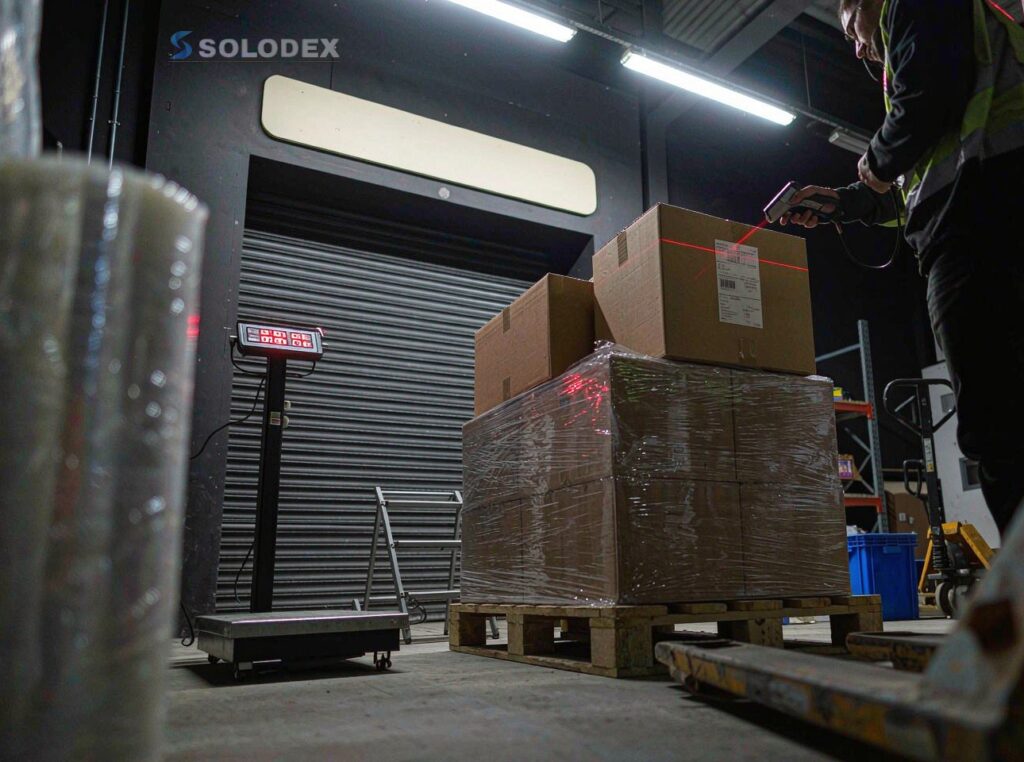
Three cartons leave a warehouse in Shenzhen on a Monday. Each weighs twelve kilos. They share one waybill number, one destination address and one receiver. On Thursday the tracking page shows a single word: delivered, with a time and a signature.
The receiver has two cartons. The sequence that gets a parcel from a factory to a van is covered in the six-step guide; this article starts after the van. The third carton is not sitting in a customs shed and it is not on a van for redelivery. It has no status at all, because the status belongs to the waybill, and the waybill arrived.
Three cartons leave, one status arrives
This is the most common shape of a small shipment and the least understood failure. The sender checks the number, sees delivered, and tells the receiver to look again. The receiver sends a photograph of two cartons on a pallet. Customer service checks the same number and reads the same word back. Nobody is lying, and nobody can see the missing carton, because the system was never asked to count that high.
A waybill carries one delivery state. The goods inside it arrive as an integer: none, one, two or three. Between those two facts sits a chain of handling events, and at some point in that chain three scanned objects became one. The moment they did, two of the three statuses stopped existing. What follows is where that happens, why the merge is invisible afterwards, and what a shipper can leave behind so that a shortage becomes a number instead of an argument.
The scan follows the handling unit
A scan does not record a carton. It records the thing the operator is holding, lifting or loading at that moment, which the industry calls the handling unit. For a single parcel the handling unit is the parcel. For three cartons strapped together it is the pallet. For a part-load it may be the stillage, the cage or the whole truck bay. The word is deliberately physical: a piece in break bulk is whatever the hook lifts in one movement, and the logic is the same here.
The handling unit changes several times on a normal route. Cartons are picked and scanned one by one at the warehouse. They are built onto a pallet and the pallet is scanned at the outbound dock. The pallet is scanned again when it is loaded, again when it arrives at the transit hub, and again when it is handed to the delivery depot. At the door, the driver scans whatever is being handed over, which is the pallet.
Each of those scans is real and each is useful. What the scan does not do is inherit the earlier ones. A pallet scan says that a pallet moved. It does not say that three cartons were on it, and no system is obliged to infer that from the history, because the history was recorded against different identifiers. The carton labels and the pallet label are separate records that happen to meet in a warehouse and never meet again.
Where three becomes one
The merge usually happens at the first warehouse, for reasons that are entirely practical. Three loose cartons are easy to lose, easy to crush and slow to load. A pallet is one forklift movement instead of three, one strap instead of handling each box, and one label instead of three. The pallet also has to be rated for what is stacked on it, and that rating depends on how it is supported, not only on the number printed on its side. The receiver may even have asked for it, because a pallet is easier to unload than a stack of cartons.
Air freight goes further in the same direction, building the unit to a contour the aircraft owns. The merge here is not a data event. Nobody sits down and tells the system that cartons A, B and C now live inside pallet P. In most small-shipment workflows the pallet gets a label, the cartons keep theirs, and the two sets of records simply stop being updated together. From that point the pallet is what moves, and the cartons are contents.
| Level | What is scanned | What one record means | What the merge drops |
|---|---|---|---|
| Carton | Each carton label | This box was picked | Nothing yet |
| Pallet | One pallet label | This unit left the dock | Which cartons were on it |
| Waybill | One shipment number | This consignment arrived | How many pieces arrived |
| Delivery | One proof of delivery | Someone accepted the unit | Whether the unit was complete |
The count itself is a packaging decision before it is a document: the same lot of liquid is one tank, eighteen IBCs or thirty packages depending on how it is filled. There is a version of this that works: the warehouse prints a pallet manifest, one line per carton, and attaches it to the pallet label, and the receiving depot ticks the lines when it breaks the pallet. That is a deliberate process, not a default, and it is a packing-list problem wearing transport clothes: one container can carry two packing lists, and a line item is a claim about a carton rather than the carton itself. Where it is missing, the pallet is a closed box as far as the data is concerned, and a closed box has no shortage until somebody opens it.
The screen only knows the waybill
Customer service is not withholding information. The screen in front of them is keyed on the waybill number and returns a status field, and that field has a small set of values: booked, collected, in transit, arrived, delivered, exception. There is no value for two of three.
The status field is a boolean wearing a longer list of words. Either the consignment has been delivered or it has not. A delivery with two of three cartons satisfies the field, because something was handed over and somebody signed for it. The system records the event it was designed to record, which is the completion of the carriage, not the completeness of the contents.
This is why the conversation goes in circles. The receiver describes a physical count. The carrier describes a document state. Both are correct about different objects, and the gap between them is not a mistake in either system. It is the seam between a waybill and a pallet.
The exception nobody opened
Carriers do have a mechanism for exactly this: the exception report. Shortage, damage, refusal, wrong address, a carton that arrives wet. The exception is what converts a delivery into a claim without waiting for the paperwork to be sorted out later.
But an exception is an event that a person creates. It is not derived. Nothing in the network compares the outbound pallet weight with the delivered weight and raises a flag when the difference matches one carton. Nothing notices that the pallet was built from three labels and arrived with two. The driver scans the pallet, the receiver signs for the pallet, and the delivery is clean by every field the system holds.
So the shortage surfaces at the worst possible moment: after the signature, when the receiver has already accepted the unit. At that point the question changes from “what is missing from this delivery” to “prove that it was ever there”, and the burden moves to the shipper. That is a different conversation with a different set of deadlines, and it is covered in the claim sequence.
What the pallet weighed
Weight is the one record that does not care about labels. A pallet built from three twelve-kilo cartons on a twenty-kilo wooden pallet weighs fifty-six kilos. If the same pallet arrives at forty-four kilos, with two cartons and the pallet, the difference is twelve kilos, and twelve kilos is exactly one carton.
That arithmetic is stronger than a photograph, because it is produced by equipment rather than by a person describing what they see. It also survives the merge: the pallet is weighed as a pallet, before it is opened, so the number covers the whole unit including its contents.
The catch is that both ends have to weigh. Many small shipments are never weighed at origin, because the cartons went straight from a packing table to a van, and never weighed at destination, because the receiver signs and moves the pallet into a store room. Without two numbers there is no difference, and without a difference the shortage is a statement rather than a measurement. A thirty-dollar platform scale at the packing table is the cheapest evidence in this article.
Weight has limits. It cannot say which carton is missing when the three are different weights, unless the expected weights are written down. It cannot distinguish a missing carton from a carton that was never loaded, which is a different dispute with a different party. And it cannot help if the pallet was re-built in transit, because the arrival weight then belongs to a different unit. Used carefully, though, it turns a vague complaint into a figure that the other side has to explain.
When the pallet is split again
Merging is only half the story. At the destination the same unit is often taken apart again, and the count moves in the opposite direction. Three cartons from three different shippers can be consolidated onto one pallet by a forwarder at origin, travel as one handling unit, and then be split at a destination depot into three deliveries to three addresses.
At origin the merge hides two cartons behind one label. At destination the split is supposed to restore them, and it does so only if the carton labels survived the trip and the depot has a line to tick. A carton whose label was covered by film, or whose barcode was crushed against a neighbour, has to be identified by hand from the manifest. If the manifest is missing, the depot has one pallet and three consignees and no way to tell which box belongs to whom except by opening it.
Three failures are common at this point, and all of them produce a shortage that looks like a loss. A carton can be split into the wrong delivery, in which case it is not missing at all and will surface when the wrong receiver opens it. A carton can be left on the pallet after the other two are removed, in which case it travels back to the depot and sits there. A carton can be scanned twice, once at the pallet and once at the delivery, which produces a record that says three cartons were delivered when only two left the depot.
The lesson is symmetrical. Every merge needs a parent-child list, and every split needs the same list read in the other direction. Without it the discrepancy does not disappear; it moves to whichever end is holding the paperwork, and the two ends spend the next week sending each other the same photograph. The delivery window that the receiver was promised is a promise about the unit, not about each carton inside it, as the marketplace delivery piece sets out from the platform side.
Five pieces of evidence, ranked
When a pallet arrives short, the shipper has whatever was created before the film went on. These are not equally useful, and the order below is roughly the order in which a claims desk will believe them.
| Evidence | What it proves | What it cannot prove |
|---|---|---|
| Per-carton scans tied to the waybill | Each carton entered the network under this shipment | That all of them were loaded |
| Outbound and inbound pallet weight | The unit lost mass equal to one carton | Which carton, if weights differ |
| Pallet manifest, one line per carton | What the pallet was built from | That the list was accurate at loading |
| Photograph of the built pallet | How many cartons were visible before wrapping | What was inside the cartons |
| Seal or strap number | Whether the unit was opened in transit | What was removed if it was |
The first line is the only one that lives in the carrier’s own system, which is why it is worth the trouble. A carton label scanned against the waybill creates a record that the carrier generated, not one the shipper supplied. When that record exists and the pallet scan does not mention the carton, the gap is visible inside the carrier’s data, and the conversation starts from a shared fact instead of two accounts.
The manifest and the photograph are second-tier because they are the shipper’s own documents. They are still worth having: a claims desk that is deciding whether to open an investigation will look at a manifest with three lines and a photograph with three cartons, and it will treat a bare assertion very differently. The seal number matters most when the pallet crossed a border, because a broken seal is an event with a time and a place.
Before the film goes on
Four actions at the packing table change the outcome, and none of them takes more than a few minutes.
Label every carton against the waybill. Not a warehouse internal label, and not a label that only carries the pallet number. Each carton needs an identifier that the carrier’s network can scan and that is linked to the shipment, so that the carton has a life of its own before the pallet exists.
Print a pallet manifest with one line per carton. Carton number, contents, weight. Three lines for three cartons. Attach it to the pallet in a pouch, and keep a copy that travels by email. This is the document that lets a receiving depot tick boxes instead of guessing, and it costs one page.
Photograph the built pallet before wrapping. The photograph has to show the cartons, not the film. One frame from the side, one from above, with the labels readable. It is not proof of contents, but it settles the question of how many boxes were stacked.
Weigh the pallet and write the number down. On the shipping document, in the email to the forwarder, anywhere that survives. The number is only useful if the other end has something to compare it with, so it should travel with the shipment rather than sit in a spreadsheet at the factory.
There is a trade-off worth stating plainly. Three cartons sent as three separate parcels each keep their own status, and a missing one is visible immediately. They also pay three first-kilogram charges, take three times the handling, and are three times as easy to lose. One pallet is cheaper to move and harder to track. The choice depends on what the cartons are worth and how quickly the receiver needs to know, and it is a choice, not a default set by the forwarder.
A count that survives the merge
The waybill answers one question: did this consignment arrive. It was never designed to answer a second question: how many pieces of it arrived. Those are different objects, and the gap between them opens at the moment a handling unit is created.
Three cartons become one pallet, the pallet becomes one scan, the scan becomes one delivery, and the delivery becomes one signature. At each step the record gets simpler and the physical shipment does not. By the time the receiver opens the pallet, the system holds a complete and accurate account of a journey that no longer matches the goods.
The fix is not a better tracking page. It is to give each carton an identity that survives the pallet: a scan the carrier owns, a manifest line the receiver can tick, a weight recorded at both ends. None of that prevents a carton from going missing. It makes the missing carton countable, which is the difference between a shortage and a suspicion.
The rest of this series looks at the same shipment from the other end: what happens after a delivery attempt fails, who is allowed to be the importer when the receiver is a private individual, and why the carton’s dimensions decide the freight before its contents do. Each of those is another place where the unit on the document is not the unit on the floor.
One waybill closes with one status; if the first delivery attempt fails, the status stays with the carriage while the parcel becomes a stored item in a different table.


