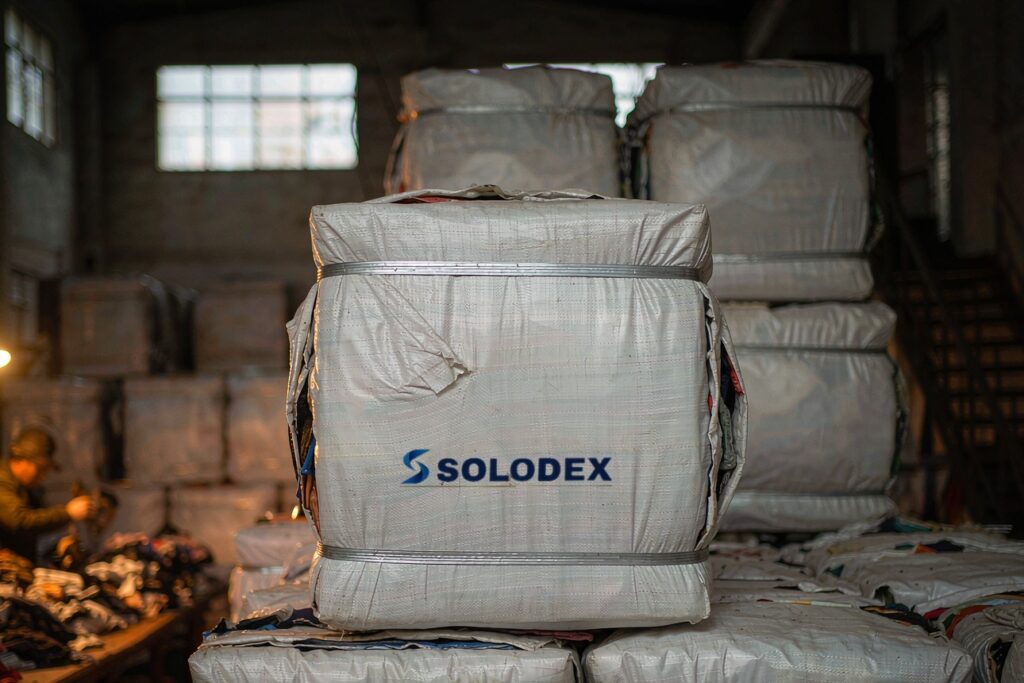
The invoice said used clothing, four hundred bales, and every word of it was true. The consignment was stopped because of the word clothing.
The importer’s agent had checked, and had been told correctly, that second-hand textiles are restricted in that market and can be imported under licence. That answer was about rags. The goods were not rags. They were wearable garments, graded for resale, and in that heading there is no licence to apply for, because the import is prohibited outright.
Two headings, a few lines apart in the same chapter of the tariff book, one prohibition and one permit. Nothing about the cargo looked different on a photograph. This is what makes the category unusual: most of the goods on this site are stopped by a document you failed to obtain. Used clothing is often stopped by a document that does not exist.
Prohibited and restricted are not two degrees of the same thing
The distinction is worth stating plainly because it decides what you can do next.
A restricted import is a permitted import with conditions: a licence, a quota, a designated port, an approved consignee, a certificate. Every one of those is a task with a completion state. You can plan around it, price it, and argue about it.
A prohibited import has no conditions, because there is no version of it that is allowed. There is no application form, no fee, no official who can approve it, and no certificate that converts it. A letter from a ministry saying the goods are for charity does not convert it either. The only thing that changes the answer is changing what the goods are.
Which is why the first question on a used clothing enquiry is not “what does it cost to clear” but “which heading does this land in at destination”. The answer is not in the invoice description, and it is not in the seller’s experience of another market. It is in the destination’s tariff and its import prohibition list, read together, for this shipment.
The bale is the product
Used clothing does not trade by the piece. It trades in compressed bales, commonly around forty-five kilograms, strapped and wrapped, and the price is per bale by grade.
The grades are trade vocabulary rather than customs vocabulary – cream, first, second – and what they describe is how much of the bale a sorter can turn into sellable stock in a market where the buyer knows the local taste. A first-grade bale is mostly wearable; a lower grade carries more cutting stock, more staining, more of last decade’s silhouette.
Two consequences follow, and both of them matter to a customs officer more than to a trader.
The buyer is not buying garments. The buyer is buying a sorting yield, and the value of the consignment is therefore an opinion about labour in the destination country, not about the goods. That is a hard thing to declare honestly, and it is why used clothing valuations attract attention: the invoice says one number per bale, and the same bale is worth three times as much once it has been sorted.
And the bale is the unit that has to stay intact. An opened bale cannot be re-graded by anybody at the destination, and a bale that has taken on water in transit is not a damaged bale, it is mould – which is a hygiene problem, not a freight problem, and lands in the same family as the condensation that forms inside a sealed container. Compressed textile is a very good sponge with no way to dry in the middle.
Cutting it up to make it legal
There is a route out of a prohibition, and it runs through destroying the goods.
Rags – wiping cloth, polishing cloth, scrap – sit in a different heading from worn clothing, and that heading is usually importable. So a shipper facing a closed market can convert the cargo: cut every garment so it cannot be worn, then declare it as wiping rags.
This is legitimate, and it is also the end of the business. The value of a bale drops from resale stock to industrial wiping material, which is a fraction of it. The labour of cutting has to be paid for in the country of export – where the goods are already cheapest – and the buyer at destination is now a workshop rather than a market trader. Some exporters do it as a last resort on goods already bought. Nobody builds a business on it.
What makes this section worth writing is the middle case, where a shipper cuts a few garments to make the consignment look like rags and leaves the rest intact. That is not a classification argument, it is a false declaration with physical evidence attached, and it is the one version of this trade that ends in seizure rather than in a discussion.
The charity route, and why it closed
Almost every market that prohibits commercial imports of worn clothing has a carve-out for donated goods: a charitable organisation, a named beneficiary, a shipment that will be given away rather than sold.
The carve-out exists for a reason, and it has been used hard enough that several destinations have tightened it – requiring the consignee to be a registered charity, the goods to be unsorted and unsaleable as a commercial proposition, and sometimes the distribution to be documented afterwards. A consignment that arrives in graded bales, addressed to a company, with a price on the invoice, is not a donation no matter what the accompanying letter says. The grading is the tell: charity goods are not graded, because grading is what you do when you intend to sell.
Hygiene is a second gate, not a formality
Where used textiles are allowed at all, they are usually subject to a public health condition as well as a trade one: a fumigation or disinfection certificate, issued in the country of export by an approved provider, and referenced by the shipment.
This is the same shape as the phytosanitary certificate on a seed consignment – a precondition issued before the goods move, not a step in a queue at arrival – and it fails in the same way, because the certificate has to describe the actual consignment, not a generic process. A certificate for four hundred bales that names no marks, no bale count and no container does not survive the first inspection.
It also has to be done before the bales are closed. Fumigation of a compressed, wrapped bale is a treatment of the outside.
The other question: is it used at all
The reverse problem is commoner than people expect. A factory with a cancelled order, an overrun, or a season that ended badly has perfectly new garments it cannot sell at first-line price, and ships them as a stock lot. To an officer looking at a container of bales, that is indistinguishable from worn clothing, and the burden of showing otherwise falls on the shipper.
The evidence is not the invoice, which can say anything. It is the size ratio. Worn clothing arrives in random sizes, because it is what people wore. A manufactured stock lot arrives in a ratio – one small, two medium, two large, one extra large – repeated across every colour and every carton, because that is how a cutting order works. A complete ratio, consistent across the whole consignment, with the polythene still on and the tickets still attached, describes goods that have never been worn.
Which is also why the packing list has to carry the ratio rather than just the quantity. Four thousand pieces is a number. Four thousand pieces in a 1:2:2:1 ratio across six colours is a fact about how they were made, and it is the kind of fact an officer can check. The rest of the labelling question sits in the documents that make new apparel legible, and none of them apply to goods that are already someone’s.
Four consignments that look identical
| What is in the bale | Heading it lands in | Is there a licence to obtain? | The usual mistake |
|---|---|---|---|
| Wearable garments, graded for resale | Worn clothing | Often no – the import is prohibited | Checking whether second-hand textiles are restricted, and getting a true answer about a different heading |
| Garments cut so they cannot be worn | Rags and wiping cloth | Usually yes, and usually available | Cutting a few and leaving the rest, which is a false declaration rather than a classification |
| Donated goods for a registered charity | Worn clothing, under a carve-out | An approval, not a licence | Graded bales with a price on the invoice, described as a donation |
| Unsold new stock in a size ratio | New apparel | Ordinary import rules | No ratio on the packing list, so nothing distinguishes it from the first row |
Read the third column downwards. That is the whole article: three of these four consignments need paperwork, and one of them needs a different product.
What to establish, and in what order
Which heading, at this destination, this month. Prohibition lists change, and they change without a press release. Last year’s route is not evidence about this year’s, and a forwarder’s memory of a similar shipment is not evidence about this one.
Is the answer in writing, from the importer’s broker? Not from the seller, not from the trade press, not from the shipping line’s customer service. The party who will file the declaration is the party whose answer is worth having.
If it is prohibited, is there any version of the goods that is not? Answer that honestly, because the only honest answers are “rags” and “no”.
If it is restricted, what does the licence attach to? The importer, the port, the quantity, the period. A licence is not a permission in general; it is permission for a named thing.
What condition must the goods be in on arrival? Dry, intact bales, and a treatment certificate that describes this consignment. Mould is not covered by a cargo claim in the way a crushed carton is, because the argument is about what the goods were when they were loaded – the same reason a claim for wet cargo turns on the loading survey rather than on the photographs.
Blocked by a heading
This is the second category in this batch that is stopped by what it is rather than by what it costs – the first being a machine that is old enough to be a different product, and there is a third in a tyre with a birthday. All three share a structure that is easy to miss when you are pricing freight: the goods are legal to make, legal to own, legal to sell in the country they are in, and simply not admitted to the one they are going to.
Which is why the useful question about used clothing is not how to clear it. It is whether the destination admits this class of goods at all, asked before the bales are bought rather than after they are on the water. Everything downstream – the certificate, the licence, the valuation, the freight – is a task. That first question is not a task. It is a yes or a no, and a no cannot be worked on.
A vehicle is the other category where the answer can be an outright no: a car may be admissible and still not registrable, which is a prohibition with better manners.
Used batteries repeat the pattern exactly: “used” changes the regime before it changes the value, and the permission belongs to somebody else.
The same test decides both trades, and it is not a test of quality: is this going to be used, or is it going to be opened up.
It is the same kind of closure, applied to a material rather than a garment: a category that is prohibited has no application form either.
A house bill for second-hand garments can be held by a separate import category long after the master bill cleared the box; the rules are in the second-hand clothing import rules.