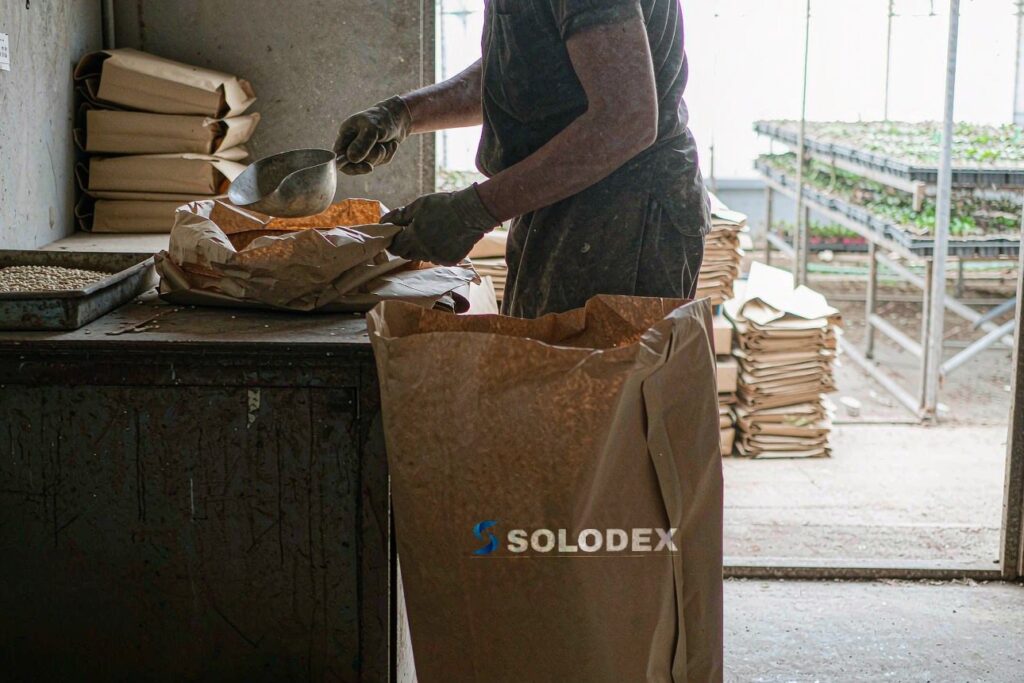
The order was for twenty kilos of sunflower seed, hulled, packed in paper sacks. The buyer was a snack producer, the price was ordinary, and the paperwork was a commercial invoice and a packing list.
It sat at destination for eleven days, then went to destruction. The reason was not the seed and not the invoice. It was one word on the specification: the buyer had ordered hulled seed, and the supplier shipped seed that would still germinate.
For a border, that single property changes which ministry is interested. A seed that can grow is not a food. It is a living organism that may carry other living things, and it is regulated by the plant health authority rather than by the tariff.
A seed is asked a different question
Most cargo is asked what it is and what it is worth. A plant, a cutting, a tuber or a viable seed is asked something else: what could be travelling with it.
Three things move inside a sack of seed. There is the seed itself, which has an identity — species, variety, sometimes a generation. There are the organisms on and in it: fungi, bacteria, viruses, nematodes, some of which are harmless where they come from and catastrophic where they arrive. And there is the inert matter — soil particles, plant debris, broken seed, and the seeds of whatever else was growing in the field.
The second and third are what plant quarantine is about. The first only matters because it determines which of the other two are a problem, and because it decides whether the consignment belongs to this regime at all.
Can it germinate
This is the line, and it runs through the middle of the same product. Roasted, salted, blanched or otherwise killed seed is food. Seed capable of germination is planting material, and planting material is regulated almost everywhere, in ways food is not.
Which is why the specification has to say which one it is, in words a customs officer can act on. “Sunflower seed” describes both. “Hulled, heat treated, non-viable” describes one. “Germination rate 92 per cent” describes the other, and it is a sentence that changes the entire document set.
The food side of that line is well understood, because it is the same regime as any other edible import: the paperwork that clears a snack is about what is in it and how it is labelled. The planting side is a different ministry with a different question, and the two do not overlap as much as people assume.
The trap is commercial rather than legal. A supplier who ships viable seed because it is cheaper, or because the buyer’s specification was vague, has not made a small substitution. They have exported a regulated article without the paperwork that its regulation requires.
The certificate is issued before the goods move
A phytosanitary certificate is issued by the national plant protection organisation of the exporting country, after an inspection of the consignment. It is not a customs document and it is not a commercial one. It states what the consignment is, in botanical terms, where it was grown, how much of it there is, what treatment it received, and that it is considered free from the pests the importing country regulates.
Two consequences follow, and both of them are about timing. The certificate cannot be issued after the goods arrive, because the inspection happens where the goods are. And it cannot be issued for goods that have already been packed and sealed by someone who is not part of the inspection, which is why seed for export is usually held, sampled and sealed under supervision before the container is closed.
The certificate also has to match. Species name, quantity, marks on the packages, the importer’s details — a certificate that describes 20,000 kilograms when the consignment is 19,800 is a certificate that will be queried, and queries at this stage are measured in weeks.
The permit comes before the certificate
Many markets require an import permit for planting material, issued to the importer before anything is shipped. The permit names the species, the quantity, the intended use, sometimes the production site, and it carries a number that the phytosanitary certificate must quote.
This ordering catches exporters who are used to food. With food, the documents are produced at the end and assembled for the entry. With planting material, the permission exists before the goods, and the documents are evidence that the permission was complied with.
An exporter who ships first and asks about permits afterwards has usually shipped something that cannot be cleared, and the goods are then in the worst possible position: alive, in a bonded area, accruing storage, and legally unable to enter.
Not all seeds are the same risk
| What is in the bag | Which regime reads it | What it needs | The usual mistake |
|---|---|---|---|
| Seed capable of germination | Plant health, plus customs | Import permit where required, phytosanitary certificate, often a named variety and a tested germination rate | Shipping it as food because the invoice says “seeds” |
| Seed that has been killed — roasted, heat treated, processed | Food safety, plus customs | Food labelling and, in some markets, contaminant testing | Assuming the exemption applies when the process was incomplete |
| Cuttings, tubers, bulbs, seedlings | Plant health, more strictly | Permit, certificate, frequently post-entry quarantine or a growing test | Treating a live plant like a durable good |
| Straw, husk or chaff used as packing | Plant health again | A status of its own, and in some markets a prohibition | Believing the wood rules cover it |
The last row is the one that surprises people, because it is not about the cargo at all. Straw and chaff used to cushion a consignment are plant products with their own phytosanitary status, and several markets prohibit them outright as packing material regardless of what they surround. The wood rules that everybody has heard of apply to wood — the ISPM 15 mark on a crate says nothing about the straw inside it.
The sample in the post is the same problem
Breeders and buyers exchange small lots constantly, and the parcel of twenty grams that arrives by courier is not exempt because it is small. It is planting material, and the same three questions apply: is it viable, is the species permitted, and does the destination want a certificate for a quantity it could hold in a teaspoon.
Some markets run a small-lot or research exemption, which is exactly the kind of provision that gets misread. The exemption usually has conditions — a permit reference, a stated use, a registered recipient, sometimes a requirement that the material stays in a controlled facility — and a parcel that meets the weight limit but not the conditions is still inadmissible.
The practical consequence is that a sample sent as a favour can cost the recipient more than the sample is worth, because a sample is a customs category too, and in this case it is two categories at once.
Arrival is not clearance
A consignment of planting material that arrives with the right papers is still inspected. The inspector checks the identity against the certificate, looks at the packaging, samples the seed, and may send it for laboratory testing for specific pathogens.
For some species and some destinations there is a further step: post-entry quarantine, where the material is grown under supervision for a period to see whether anything develops. That is not a delay in the ordinary sense. It is a scheduled phase measured in weeks or months, and it happens after arrival, on the importer’s premises or in an approved facility.
Which means the arrival date on the air waybill or the bill of lading has almost no relationship to the date the goods become usable. For this category, the only date worth planning around is the one on the permit.
What rejection actually costs
Rejected planting material is rarely returned. Returning it would require importing it back into the country it came from, which triggers the same questions in reverse, and the goods may have been sampled, opened or fumigated in the meantime.
So the realistic outcomes are treatment, destruction, or a long argument. Treatment is only possible if a treatment exists for the pest concerned and the destination accepts it. Destruction happens at the importer’s cost, and the freight has already been paid. The argument is the expensive option, because it involves the exporter, the importer, the NPPO at both ends and, usually, a lawyer.
This is why the economics of this category look strange from outside: a consignment worth a few thousand dollars can carry a compliance cost, and a failure cost, that dwarf it. Which is also why experienced buyers of planting material ask for the permit number before they ask for the price.
Five things to settle before the seed is bagged
Is this material capable of germination, and does the specification say so? Heat treated, non-viable, for consumption — or viable, with a germination rate. One of those sentences has to be in the contract.
Does the destination require an import permit, and does it name this species? Botanical name, not the trade name. “Marigold” is not a species.
Which pests does the destination regulate on this species, and is the origin free of them? This is the question the phytosanitary certificate answers, and it can only be answered honestly if the growing area was monitored.
What is the packing made of? Wood needs the ISPM 15 mark; straw may be prohibited; some markets require the packing to be new and synthetic.
Is there a post-entry quarantine requirement, and who pays for the weeks it takes? If the answer is yes, the delivery date is not a transport question.
None of these is answered by a freight rate, and all of them decide whether the freight was worth paying — the same structure as a used machine that is inadmissible before it is expensive, and the opposite of ceramics, where the question is about a mouth rather than about what is alive inside the carton.
Alive is a legal category
Most cargo is inert, and the border treats it accordingly: describe it accurately, value it honestly, pay the duty, and it moves. Planting material is the exception that proves the rule. Something that can grow can also carry, and the entire apparatus around phytosanitary certificates, permits and post-entry quarantine exists because of that one property.
Which is why the most useful sentence in this category is not about freight at all. It is the one that says, on the specification and on the invoice, whether the seed in the bag is food or is a plant waiting to happen.
Everything else — the certificate, the permit, the inspection, the quarantine bed — follows from that sentence. Get it wrong and the goods are not delayed. They are inadmissible, and they are alive while you find out.
Both categories turn on a property of the goods rather than a document: a living seed and a dated tyre are read, not described.
Plants that miss the real cutoff cannot wait for the next ordinary sailing, because their own certificate clock starts at packing; the rules are in seeds and plants shipping.


