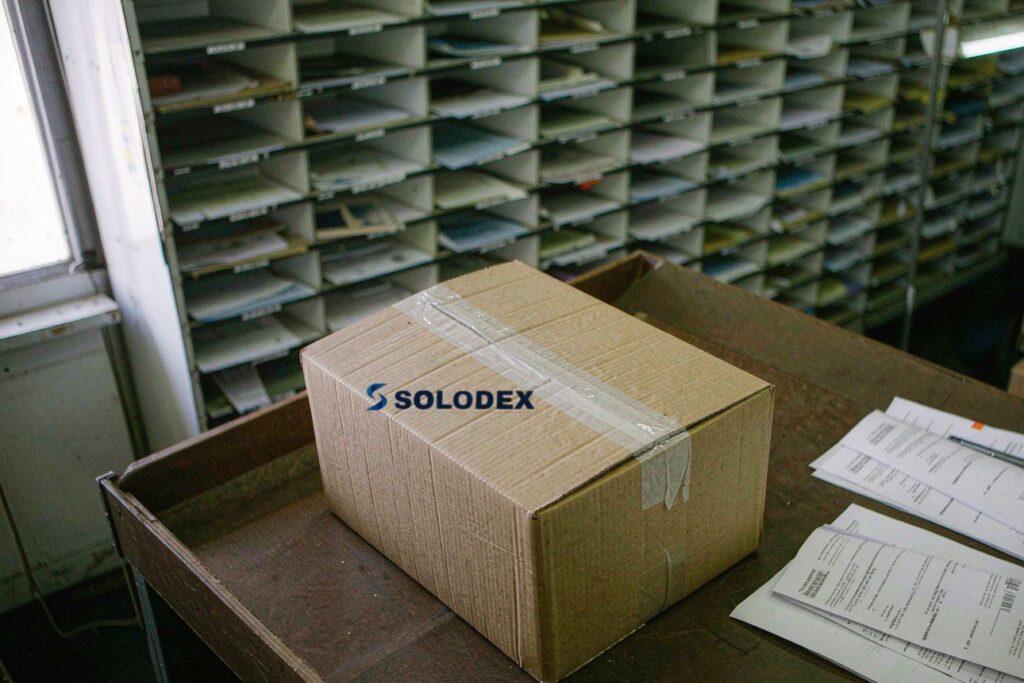
Five documents, one pallet
Five thousand stainless steel vacuum bottles left Shenzhen on a Tuesday. By the time the container was loaded, the same shipment had been described five times, and no two descriptions were identical.
The purchase order said 5,000 pcs, USD 4.30, FOB Shenzhen. The packing list said 250 CTNS, 20 PCS/CTN, N.W. 11.00 KGS, G.W. 12.72 KGS, 0.062 CBM/CTN. The commercial invoice said 5,000 PCS, USD 21,500.00, FOB SHENZHEN. The export declaration said 不锈钢真空保温瓶, 5,000 个, 净重 2,750 千克. The certificate of origin said 5,000 PIECES, 250 CARTONS, N.W. 2,750 KGS, G.W. 3,180 KGS.
Every one of those is correct. Every one of them describes the same pallet. And a machine reading all five would conclude that it is looking at five different things, because nothing in any of them says this is the same shipment as the others.
That is the actual problem in document automation, and it is not a transmission problem. Files have been moving between systems for decades. What has never been automated is the agreement that five differently-worded records are one object.
A human does the multiplication without noticing
Show the packing list and the invoice to anyone in the office and they will tell you they match. Ask how, and the answer is a small piece of arithmetic that happened without being announced: 250 cartons at 20 pieces each is 5,000, which is the number on the invoice.
A machine does not do that. To a parser, 250 CTNS is a quantity with the unit “carton” and 5,000 PCS is a quantity with the unit “piece”. They are not equal, they are not comparable, and unless somebody has written down the conversion, the only correct conclusion is that the two documents disagree.
This is where most “document AI” projects fail, and they fail quietly. The software is asked to check whether the documents match. It reports thousands of mismatches. The team concludes the software is not ready, and goes back to reading PDFs by eye — which works, because the eye is doing conversions that nobody has ever written down.
Five fields that have to come from one place
The reason the five documents diverge is not carelessness. Each one is written for a different reader, and each reader has a different convention.
The description. The invoice describes the product the buyer bought. The customs declaration describes the product the tariff schedule recognises. Those are not the same sentence, and they are not supposed to be — but if the two descriptions drift far enough apart, an officer has a legitimate question and a system cannot tell whether the difference is translation or error. What the officer actually reads across the invoice and the packing list is narrower than most shippers assume.
Quantity and unit. Cartons for the warehouse, pieces for the buyer, kilograms for the airline, cubic metres for the forwarder. Four units, one shipment, and a conversion rate that exists in somebody’s head.
Weight. Net and gross, per carton and per shipment, with or without pallets, rounded at different decimal places by different systems. A two per cent difference between two documents is normal and needs explaining; a two per cent difference in the wrong direction is a red flag.
Value and terms. FOB on the invoice, CIF on the declaration, a currency conversion somewhere in between, and a freight figure that may or may not include the origin charges. All of it defensible, none of it self-explanatory.
The key. One identifier that appears in all five documents and means the same thing in each. Without it, matching is done by resemblance — same buyer, same date, roughly the same amount — which works until a customer orders twice in a month.
Three kinds of difference, only one of which is a machine problem
Not every mismatch is equal, and treating them equally is why automated checks produce so much noise that people stop reading them.
Mappable differences. “PCS” and “PIECES” and “个”; “CTNS” and “CARTONS”; a trailing zero on a weight. These are vocabulary, and a mapping table solves them permanently. They should never reach a human.
Explainable differences. Gross weight differs by two per cent because one document includes the pallet and one does not. Net weight differs slightly because one figure is calculated and one is weighed. These need a rule with a tolerance, and the rule has to be written down — otherwise the same difference is flagged forever and eventually ignored.
Material differences. One carton short, a digit transposed in the value, a tariff code in a different chapter. These are the ones worth a person’s attention, and they are precisely the ones that get lost when the first two categories generate a hundred alerts a day. They are also the differences that decide which kind of examination the container is sent to, if it is sent to one at all.
The key is the only part that is actually hard
Everything above is solvable with a mapping table and a tolerance. The key is harder, because it has to be created before the documents exist and survive every change afterwards.
A shipment that ships in three lots, is consolidated with another supplier’s cargo, is repacked at a warehouse, or has one carton rejected at inspection will produce documents that no longer share a clean identifier. The purchase order line splits; the container number covers two orders; the certificate of origin covers the whole consignment while the invoice covers one lot.
The practical answer is not a single perfect key but a small hierarchy: a commercial key (the order line), a physical key (the carton or pallet mark), and a transport key (the booking or container) — the same lesson as a transit document that lives in a system, where the number is the shipment’s only existence. Each document carries whichever it can, and the mapping between them is maintained in one place. When a shipment splits, the split is recorded once, and every downstream document inherits it.
The fifth document is a claim, not a copy
Four of the five documents describe the shipment. The origin certificate describes the shipment and makes an assertion about where the goods came from — and that assertion is the reason the document exists.
Which is why it repeats the quantity and the weight even though three other documents already carry them: the certificate is not quoting the invoice, it is certifying a set of facts to a third party who has no reason to trust either of you. Change the quantity on the certificate without changing the shipment and you have not corrected a typo, you have made a false declaration about origin.
That asymmetry explains why the certificate is the last of the five to become routine data. The first four are bookkeeping; the fifth is evidence, and evidence has a signatory.
What each document actually says
The table is the same shipment, five times. The third column is the honest answer to “can a machine reconcile these two without being told how”.
| Field | How the five documents write it | Aligned by a machine alone? |
|---|---|---|
| Description | Commercial name on the order and invoice; tariff wording on the declaration; a third phrasing on the origin certificate | No — needs a link between the commercial and regulatory descriptions |
| Quantity | 5,000 pcs / 5,000 PCS / 5,000 个 / 5,000 PIECES / 250 CTNS | Only with a stated conversion (1 CTN = 20 PCS) |
| Weight | Per carton on the packing list; totals on the certificate; net only on the declaration | Only with a rule for net/gross and pallet inclusion |
| Value | Unit price on the order; total on the invoice; CIF value on the declaration | Only with the freight and insurance figures separated |
| Key | PO number, invoice number, carton marks, booking number, certificate number | No — the crosswalk has to be maintained |
What automation actually removes
It is worth being precise about the benefit, because “faster” is not it. Typing an invoice number takes a second; no system will repay its cost on typing.
The first thing automation removes is the second entry. Every field that is typed twice is a field that can be typed differently, and the differences are what generate the exceptions. One source, copied, cannot disagree with itself.
The second thing it removes is the search. When a discrepancy appears at the port, the cost is not the correction — it is the two days spent finding out which of five documents is wrong, who wrote it, and what the correct figure was. A system with a single source answers that in a minute; a folder of PDFs answers it in a meeting.
Neither of those benefits requires artificial intelligence. Both require that the five fields above have one home.
Five things to fix before buying anything
The order matters, and it is the reverse of how these projects usually run.
Write down the regulatory description once, in the language of the tariff, and use that exact string wherever a customs document is produced — including the origin certificate. State the conversion rates between selling units and packing units, and put them where a machine can read them. Choose one weight convention — net and gross, per carton and total, with or without pallet — and apply it everywhere. Choose one value convention, with the incoterm and the currency stated on the document rather than implied. And define the key hierarchy, including what happens when a shipment splits.
None of that is software. All of it is the precondition for software, and a project that starts with the software will spend a year rediscovering it.
The long pole is the order confirmation
Every document in this article is a copy of something agreed when the order was confirmed. The description, the unit, the price, the incoterm, the packing ratio — all of them exist in the confirmation before anyone opens a template.
Which is why the useful work happens there, in the twenty minutes when a salesperson is confirming quantities and terms. A unit that is ambiguous at that moment will be ambiguous in five documents; a description that is written for the buyer and never mapped to the tariff will be re-invented by the customs broker, differently each time.
The copies each have their own logic. The origin certificate has a form for every destination and a rule behind each form; those rules are written to be read by a person, which is why the certificate resists becoming data longer than the invoice does. But all of them start from the same place. The shipment is described five times because it was defined once — and if that one definition is loose, the other four will be loose in different directions.
The wire between two companies has the same problem in a different medium: a format carries structure, not meaning, and the meaning lives in a mapping table.
The invoice is the one copy that becomes a tax event: platform-cleared invoices are numbered by the platform, which makes the number on your own system an internal reference rather than the key.
The certificate is the one copy that makes an assertion rather than repeating a fact: three shapes of that assertion allocate the risk very differently.
The last piece of the chain is what happens when a machine reads all five copies at once: it checks agreement, not truth, which is why an undeclared difference costs more than a wrong number.
Five descriptions sharing one source is only half the problem: the first sheet can be born with thirty-seven objects missing, and the other four inherit the omission faithfully.
Five copies can agree perfectly and still all be wrong about the same thing: if the shared source was printed before loading, every copy shares its tense.
One shipment becomes five descriptions; one sheet also becomes five readings, with rows left between them.
Five descriptions can agree with each other; loose cargo still needs a mark on the object before any of those descriptions can be matched to it.
Five documents can disagree about one pallet; they can also agree on twenty-four and still describe an arrangement that no longer exists.
Five documents can describe one pallet five different ways; a break bulk remark has the opposite failure, where four sheets agree perfectly because one sentence was dropped.
One shipment can carry five acceptable descriptions of the same goods; a restow adds no description at all, only a second handling row for the same sealed box and the same port of discharge.


