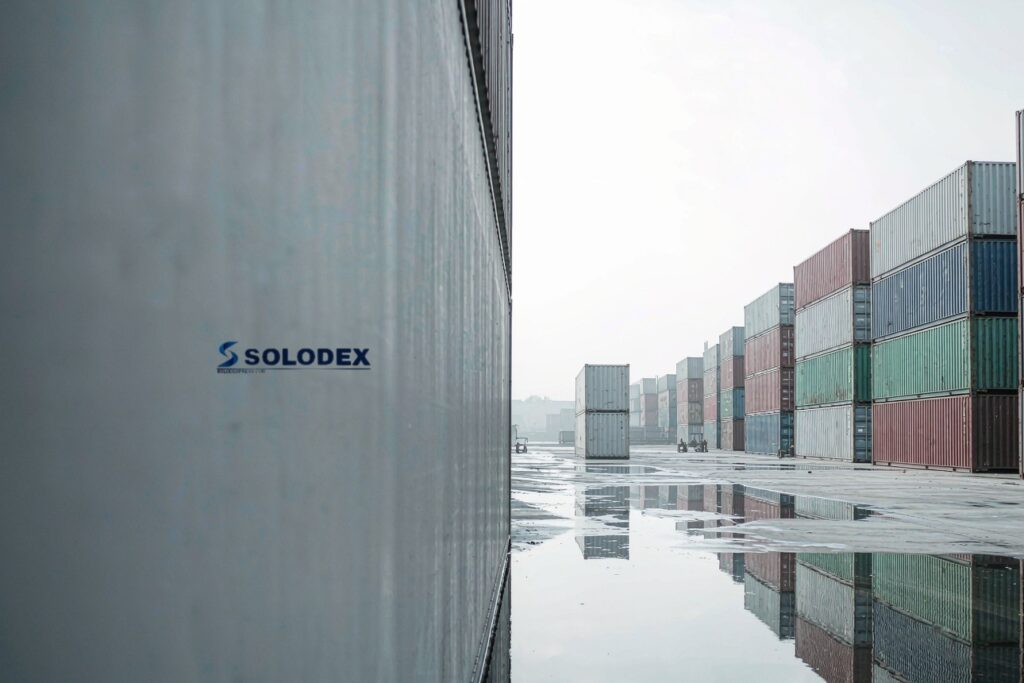
On day ninety-seven the container is still in the same bay it was placed in on day one.
The buyer says the injection moulding machines do not match the agreed specification. The seller says they do. Both sides have lawyers, the arbitration is in its fourth month, and neither party has told the terminal anything — because telling the terminal anything would look like accepting something.
By now the storage charges exceed the interest on the invoice for two months. The container has been inspected once, by a surveyor appointed jointly, whose report concluded that further testing was required. Nothing else has happened. And nothing will happen, because the port does not wait for an award; it runs a clock, and the clock has its own view of the dispute.
This is how most abandoned cargo begins: not with a company walking away, but with two companies standing still.
Abandonment is a decision, even when nobody made it
In law, abandoning cargo is an act. Somebody with rights to the goods gives them up, usually in writing, usually in exchange for the carrier releasing them from further charges. It is a decision with a signature on it.
In practice, almost nothing arrives at that signature. What arrives instead is one of two other states, and the difference between them matters more than most importers realise.
Unclaimed goods. The paperwork is in order, somebody is entitled to collect, and nobody does. This is the most recoverable state, because the goods are still legally alive: pay the charges, produce the documents, and they move. It is also where most disputes sit, because collecting would mean conceding a point in an argument being had somewhere else. A surprising share of unclaimed cargo is unclaimed for exactly the reason in the opening of this piece — and often the block is not money but which original document is where.
Failure to declare. This is the state the law creates for goods nobody has presented to customs. It is not abandonment, and nobody signed anything, but the consequences are harsher than abandonment in one respect: the goods can be sold by the authority while you remain the owner of record. Under Chinese rules an import declaration is due within fourteen days of the vessel’s arrival, and goods still undeclared after three months can be sold off by customs. Other jurisdictions use a general-order process with their own clock. Either way, the outcome is the same shape: the goods leave your control without your participation.
The practical difference between the three states is what you can still do. Declared abandonment is close to irreversible. Unclaimed goods are recoverable until the meter makes them irrational. Failure to declare is recoverable only until the disposal date, after which you are arguing about the residue rather than about the cargo.
What the meter does while everyone waits
The cost structure of waiting is not linear, and it is not obvious from any single invoice. Four phases, four different prices.
| Phase | State of the goods | What is being charged | What is still open |
|---|---|---|---|
| Inside free time | Cleared for collection, or awaiting documents | Nothing, or a nominal lift charge | Every option: return, sell, declare, destroy |
| Past free time | Still collectable | Storage and container detention, daily, on separate clocks | Return, sale, declaration — all still possible, all now carrying arrears |
| After notice | Carrier has served notice and may assert a lien | The same two clocks, plus notice and handling fees | Negotiated abandonment, which can sometimes buy a waiver of part of the accrued charges |
| After the disposal date | Sold or destroyed by the authority or the carrier | Sale proceeds applied to charges; a shortfall may still be pursued | Claiming the residue, if any, inside a limited window |
Two things are true of every row. Each phase costs more per day than the one above it, and each phase offers fewer choices than the one above it. That combination — rising price, shrinking options — is the whole mechanism by which “doing nothing” becomes the most expensive decision available. It is not that waiting is priced punitively. It is that the cheap options expire first.
The visible meter is storage. The one people forget is the container itself: a box held at a terminal is a box not moving, and that charge runs on a different clock from the storage bill, often at a higher daily rate, and often on a different party’s account.
The meter is not the expensive part
Add up storage, detention, notice fees and the surveyor, and for a mid-value consignment the total is usually a fraction of the invoice. That arithmetic is what makes waiting feel survivable, and it is misleading for three reasons.
The insurance stops. Cargo policies are written for transit and for a stated period after discharge, not indefinitely. A container sitting in a dispute for four months is, at some point, uninsured — and the moment it becomes uninsured is not announced.
The tax position ossifies. Goods that were going to be imported and were never declared sit in a state that is neither imported nor exported. Every month they remain there makes the eventual declaration harder to support, because the commercial story that justified the original valuation has been replaced by a dispute file.
The counterparty’s position improves. In most disputes about undelivered goods, the party that can show it mitigated its loss wins the argument about who pays for the delay. Silence is not neutral; it is a choice that gets more expensive to defend as the file grows.
Selling it where it stands requires an importer
The obvious answer — sell the goods locally and split the proceeds — runs into a fact that is easy to miss. Goods that have not been cleared cannot enter commercial circulation. To sell them inside the country, somebody has to import them first.
That somebody becomes the importer of record. They owe the duty, they carry the compliance obligations that attach to the product — labelling, standards, certification, whatever regime the category sits under — and they inherit any defect in the goods, because they are now the party that put them on the market. No buyer accepts that without a discount.
So the real definition of a local sale is: finding a party willing to become the importer. In practice that is a local trader or a liquidation buyer, and the price they offer is the residual value minus duty, minus compliance cost, minus a risk margin for everything above. It is frequently the best of the bad options, and it is almost never the number people imagine when they first say “we’ll just sell it there”.
The comparison that decides it is not sale versus return. It is sale versus the full cost of every other path — which is the same arithmetic that decides whether the goods should move at all, run with a different set of inputs. Where the residual is close to zero, the honest comparison is between a local sale at scrap value and a supervised destruction that at least closes the file.
What the carrier is allowed to do with it
A carrier is not a warehouse with patience. It has a lien on the cargo for unpaid freight and charges, and in most bills of lading it also has a right to sell the goods after notice, applying the proceeds to what it is owed. That clause is on the back of every bill, in type nobody reads, and it is the clause that decides who has authority over your cargo on the day the dispute is still running.
The procedural step that makes all of this legal is notice — and notice is sent to the party named on the bill, at the address on the bill. Which is frequently an address that stopped working some years ago, or a trading company that has since been dissolved, or an inbox that one person monitored until they left.
So the sequence that produces the angriest phone calls in the industry runs like this. The carrier serves notice correctly to an address that no longer works. Nobody responds, because nobody saw it. The goods are sold under the lien. The shortfall is invoiced to the booking party, who calls to say the matter was under negotiation the entire time.
All of it is correct on paper. The fix costs one minute at booking: check that the notify party on the bill is a mailbox somebody actually reads, and update it if the goods are ever likely to be disputed. Nothing else in this article is as cheap.
Who ends up paying
Abandonment feels like an exit. It is not. Three separate claims run in parallel, and giving up the goods does not extinguish any of them.
The carrier has a contract with whoever booked the freight, and a lien on the cargo. Abandoning the goods satisfies neither. Freight, detention and any costs of disposal can be pursued against the booking party long after the container has been sold.
The terminal charges the carrier, and the carrier passes it on. This is why the invoice often arrives months later, from a company the importer has no relationship with.
The customs authority looks to the declarant. If a declaration was filed and the duty never paid, abandoning the goods does not close that account — and if the goods were seized rather than simply left, the procedure that follows runs on the authority’s timetable, not on anyone’s commercial one.
When goods are sold off, the proceeds are applied in a fixed order: duties and taxes first, then storage and handling, then the carrier’s freight, and only then anything left for the owner — usually held for a limited period and then treated as unclaimed. For most consignments the residue is zero, and the shortfall is not written off. It is invoiced.
That is the sentence worth remembering: abandonment does not cost you the goods. It costs you the goods and a bill.
The decision that has to be made in week one
Everything above is a description of a clock. The useful question is therefore not “should we abandon this” but “who is able to act, and by when”.
Name the party who can legally act in the destination country. Not the party who owns the goods — the party who can file a declaration, surrender them in writing, or sell them. If the buyer has stopped answering and the seller has no legal presence there, the answer is usually a forwarder acting under a power of attorney, and that authority has to be granted before it is needed.
Write down the disposal date, not the arrival date. The date that matters is the one after which the goods stop being yours to decide about. It is calculable in every jurisdiction, it is rarely in anyone’s calendar, and it is the single most useful number in the file.
Get both quotes in week one. A return quote and a local sale quote, obtained while the goods are still inside free time, are the two numbers that make the decision rational. Obtained in month three, they are both worse and one of them may no longer exist.
Decide who bears the wait. If a dispute is the reason, the dispute needs a cost allocation for storage before it needs a hearing date. A seller who agrees to “keep the goods available pending resolution” has agreed to fund the other side’s litigation position.
Check whether the goods can be sold at all. Some categories cannot be sold locally without certification the buyer will never obtain, and some cannot be destroyed locally at reasonable cost. For those, the option set is narrower than the spreadsheet assumes, and the narrowing happens before the dispute does.
None of this resolves the commercial argument. It just makes sure the port’s clock is not deciding it. Cargo does not become abandoned on the day somebody gives up on it; it becomes abandoned on the day the last cheap option expires, which is usually several weeks earlier, and usually while everyone is still confident they are waiting for something.
Abandonment builds through unpaid days and unclaimed space; at parcel scale the same accumulation starts with a failed call and a deposit scan that nobody acts on.


