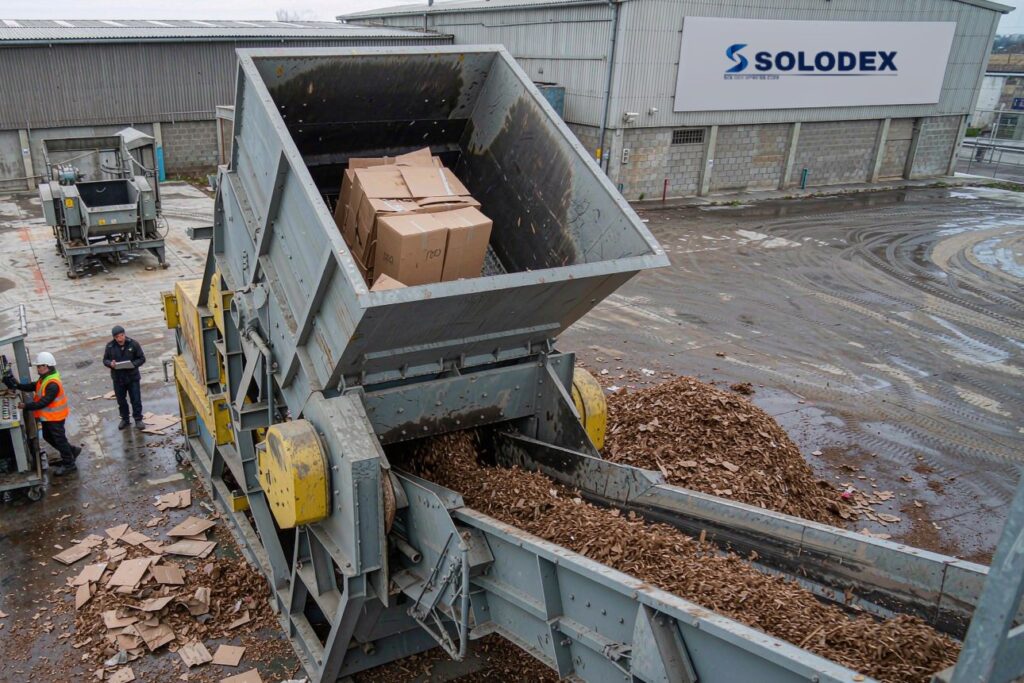
Four thousand two hundred toys are sitting in a container yard outside Long Beach. They failed a lead test on the painted parts, one of the checks children’s products meet at the border. They cannot be sold, cannot be donated because the liability travels with them, cannot go back because the freight exceeds what they are worth, and cannot be given away quietly because somebody would notice.
The brand’s instruction is a single word: destroy.
Three weeks later the container is gone from the yard and the invoice has been paid. Then the broker asks for the certificate, and there isn’t one. In the language of the file, four thousand two hundred toys are still inside the country. The entry is still open, the bond is still posted, and the duty that was going to be refunded has not been refunded. Nothing has changed except that the goods are no longer where anyone can see them.
This is the most common way destruction fails, and it fails quietly. The physical act is easy. Proving it happened is the whole job.
Destruction is a document, not an event
A crusher can end four thousand toys in under an hour. What it cannot do is end the record of them. Customs administers an account, not a warehouse: a container number carries an entry, a guarantee, a duty position, and sometimes an inspection history. Grinding the goods does nothing to any of that.
So the deliverable of a destruction job is not a pile of scrap. It is evidence that a named party is willing to accept — a certificate signed by someone with standing to say the goods no longer exist, in a form the receiving office recognises. Everything else in the operation is logistics.
That reframing changes what you plan for. If destruction is an event, you plan a truck and a machine. If it is a document, you plan a witness, a facility, a signature, and a filing path — and the truck is the cheap part.
What the word supervised actually buys
Almost every regime that grants a benefit for destroyed goods attaches the same condition: the destruction must be supervised, meaning observed by a party the authority recognises, and documented by that party rather than by the owner.
The observer is usually one of three. The customs authority itself, attending or sending an officer. A licensed destruction facility authorised to certify what it processed. Or, in the brand-protection case, a third-party inspection firm engaged by the trademark owner, whose job is not customs at all but proving the goods did not reappear in a market.
That supervision is priced. Attendance, transport to an approved site, the processing fee, and the paperwork typically add up to several times what an unsupervised job would cost — and the gap is the honest reason people skip it. The trade is not free, but what it buys is specific: closure of the customs entry, release of the guarantee, treatment of the duty position, a substantiated inventory loss, and an insurable event. Five things, for one fee.
The distinction that matters commercially is the one nobody writes down. “I destroyed it” and “someone certified that I destroyed it” are two different products at two different prices, and only the second one closes anything.
Four ways to make goods stop existing
The method is chosen by what the goods are and what the receiving office will accept, not by what is cheapest per tonne.
| Method | Usually chosen for | Who has to witness | What makes it unusable |
|---|---|---|---|
| Landfill | Inert or mixed waste with no recovery value | Licensed site operator, sometimes the authority | Landfill restrictions on plastics and recoverable material in a growing number of jurisdictions |
| Incineration | Organics, textiles, pharmaceuticals, anything that must not be recognisable | Facility operator, with emission controls on record | Air-permit limits, and cost per tonne that rarely suits bulky goods |
| Crush, cut or shred | Branded goods, electronics, anything at risk of reappearing in a market | Third party engaged by the brand, with photographs of the destroyed component | Recovery value: if the scrap is worth collecting, someone will collect it intact |
| Controlled treatment | Batteries, chemicals, anything with a refrigerant or a regulated substance | Facility holding the specific permit, plus a manifest | No licensed facility within economic distance — the common case |
Read the last column as a design constraint rather than a warning. In most real jobs the method is decided by which of those four is available at a site you can legally reach, and the cost follows.
For the toy consignment at the top of this piece, a supervised destruction lands somewhere between fifteen hundred and twenty-five hundred dollars: transport to a permitted site, a per-unit processing fee in the range of thirty to fifty cents, the witness, and the certificate. Against a goods value of eighteen thousand, that is roughly a tenth. Against the cost of returning the same consignment, it is a rounding error — which is why destruction is usually the right decision and almost always the badly documented one.
When the goods cannot die where they lie
The assumption underneath every cheap destruction plan is that the goods can be destroyed nearby. For a large share of shipments that assumption is false.
Batteries need a facility permitted to take them, and often need to be discharged and separated first. Equipment containing refrigerant has to have the gas recovered before anything is crushed. Pharmaceuticals and agricultural chemicals typically must go to a licensed high-temperature facility, which may be the only one in the country. Cosmetics and liquids bring their own constraints — the same product that is a regulated liquid for transport is a regulated waste for disposal, and the two sets of rules do not align.
The result is a distance problem disguised as a fee problem. A site three hundred kilometres away is not a 5 percent cost increase; it is a transport leg, a manifest, an appointment, and sometimes an escort. When the only permitted facility is in another country, the goods have to be re-exported to be destroyed — which puts the whole cost back through the arithmetic of moving goods across a border, and can make destruction more expensive than the original shipment.
This is worth checking before the decision, not after. The question is not “how much does destruction cost” but “which permitted site can take these goods, and how do they get there”.
The paper that pays for itself twice
A properly executed destruction certificate is unusual among shipping documents in that several unrelated departments need the same original, for unrelated reasons.
Customs needs it to close the entry and release the guarantee. Finance needs it to substantiate an inventory write-off — a destroyed consignment that cannot be evidenced tends to stay on the books, and stock that stays on the books cannot be deducted as a loss. Insurance needs it because a total loss claim is settled on proof rather than on assertion. The brand needs it because its entire purpose was to prove the goods did not enter a secondary market.
Four claimants, one original, and a filing system that usually assumes one of them. The characteristic failure is not that destruction was skipped — it is that destruction happened and the certificate went to logistics, while finance closed the quarter without it. Six months later the goods are still in the inventory system and nobody can explain why the warehouse count disagrees with the ledger.
Practical rule: decide who holds the original before the job, and send certified copies to the other three on the day. The original belongs to whichever function has an audit obligation, which is almost never the one that arranged the truck.
What happens to the ones nobody watched
Three patterns account for most unevidenced destruction, and they are worth naming because each has a different failure mode.
Destroyed in-house. The goods were crushed in the company’s own yard, photographed on a phone, and the photos went into a chat thread. Nothing is wrong with the act. What is missing is a party with standing, so the entry stays open and the write-off has no support.
Handed to a recycler. This is the most expensive version, because the incentive is inverted: a recycler who can resell the goods has a reason not to destroy them, and the goods that reappear in a discount channel are traceable to the importer who “destroyed” them. Goods seized in an enforcement action have a version of this problem too — what happens after a seizure is decided by the authority, not by the owner, and the owner’s paperwork obligations continue in parallel.
Declared destroyed. The paperwork says it happened, the goods went somewhere else. This is the one that ends relationships rather than files, and it is the reason supervision exists at all.
The internal control that catches all three is embarrassingly simple: somebody from your side stands in the yard while it happens, and the signature on the certificate belongs to a party you did not pay for the destruction. If both of those are true, the three patterns above cannot occur.
Before the truck arrives
Six decisions, all of which are cheaper to make in the office than at the gate.
Who witnesses, by name. Not “the facility” — the person, and the authority that recognises them. If the answer is a facility, check that its certificate is accepted by the office you are trying to close.
Which site, and whether it can legally take these goods. A permitted facility that cannot accept batteries is not a permitted facility for a shipment of batteries.
What the certificate will say, in advance. Ask for a sample before the job. If the sample does not carry the consignment reference, the quantity, the method, the date and the signatory’s capacity, it will not close anything.
Who receives the original. One function, named, with a filing path that outlives the person.
What happens to the residue. Scrap metal, recyclable plastic and recovered components have value, and that value offsets the cost — but only if the contract says who keeps it. Silence on this point routinely gives the salvage to the contractor and the invoice to you.
Whether the whole exercise is still cheaper than the alternatives. Destruction competes with return and with sale in place, and the comparison is only honest when all three numbers include their own paperwork. A destruction quote that omits supervision is not a cheaper option; it is a different, unfinished one.
The goods are the least valuable thing in this process. What survives them — an entry that closes, a loss that can be explained, a brand that did not leak — is what the fee is actually buying.
For a damaged consignment, there is an earlier step that should not be skipped on the way here: establishing the loss while the evidence is still intact. The claim and the destruction are two different files, and destroying the goods before the survey closes the first one by accident.
Destruction is a document with a witness, a facility and a signature; a wash bay receipt plays that role for tank residue, recording 169 kg received and 1.8 cubic metres of effluent against one equipment number.
Goods are destroyed at the end of a chain of unclaimed days; for a small parcel that chain often begins with a failed delivery nobody instructed the carrier about.


