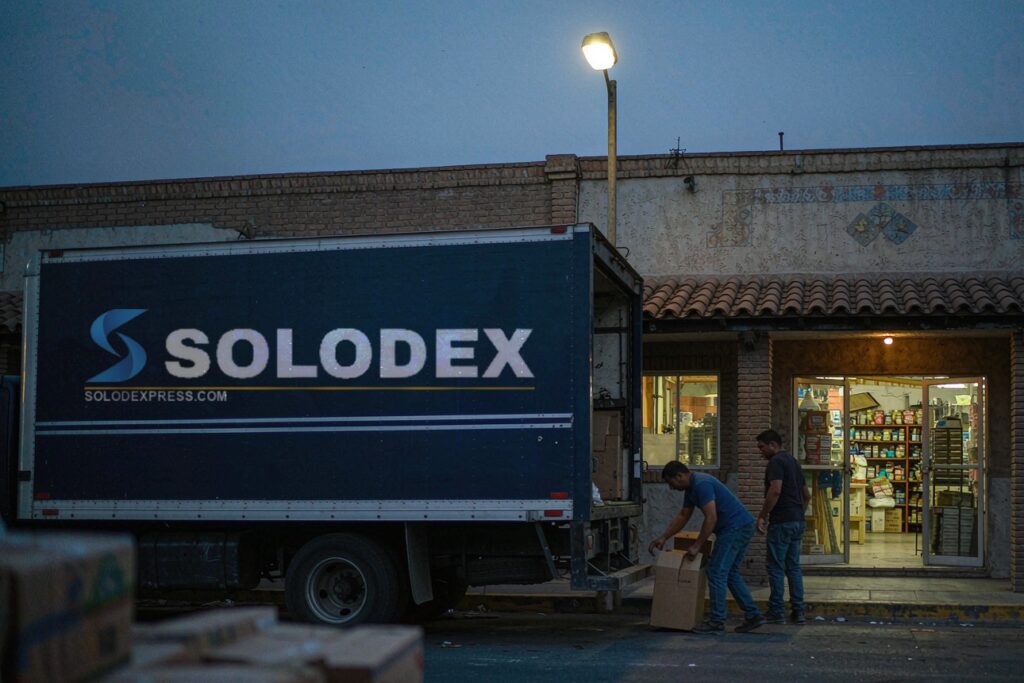
Cleared on the tariff, held on the certificate
The entry was clean. Origin was documented, the preference was claimed, the duty came out at zero. And the container still sat at Manzanillo for eleven days, because the customs broker was asking for a document nobody at the factory had heard of: a NOM certificate for the product, not for the shipment.
This is the ordinary shape of the Mexican border. The tariff question and the product question are handled by different people, on different paperwork, under different authorities, and only the first one is about money. The second is about whether the goods may be sold at all, and it is the one that turns a good margin into a storage bill.
NOM stands for Norma Oficial Mexicana, and the first mistake is treating it as one certificate. It is a body of mandatory standards, several hundred of them, each naming a product category and each with its own route to compliance. What an importer needs is not “a NOM” but the two or three standards that apply to this specific product, plus the label rules that apply to its packaging.
Two families, and importers usually see only one
The standards split into two families that behave very differently, and the split is the reason shipments clear customs and then fail in a shop.
Safety and performance standards require testing at an accredited laboratory, certification by an approved body, and continuing surveillance. Electrical products, gas appliances, toys, medical devices and a long list of others sit here. Without the certificate, the goods cannot be cleared for sale, and the certificate is not something a supplier can print.
Commercial information standards govern what the label and the instructions must say. They do not usually require a certificate in the same sense; they require that the artwork be correct, in Spanish, and complete. They are checked at the border, in the warehouse, and later by consumer authorities, and they are the ones suppliers forget — because the product passed its electrical test and everybody assumed the file was finished.
Most consumer electronics need both. A lamp or a driver needs the safety route and the labelling route, and the two are assessed by different people against different texts. Getting one and not the other produces the worst outcome available: goods that clear, sit in a warehouse, and cannot be invoiced to a retailer.
The certificate has an owner, a model and a date
Three fields on the certificate decide most of the commercial consequences, and none of them is about the product’s quality.
The owner. The certificate is held by a legal person in Mexico — usually the importer, sometimes the manufacturer through a local representative. It does not travel with the goods. Change importer and you may have to certify again, which means the certificate is a form of lock-in that belongs in a distribution agreement, not in a filing cabinet.
The model. The certificate lists the models it covers. The model on the certificate, the model on the customs entry and the model on the label have to be the same string. A different suffix, a different wattage presented as a new model, a colour variant the certifier was not told about — each of these is a discrepancy that an inspector can find in thirty seconds and that cannot be argued away.
The date. Certificates run for a fixed term, commonly a year, with surveillance in between. The surveillance is paid for and scheduled, and if it is skipped the certificate lapses — quietly, without anyone sending a notice to the factory. A product that was compliant in March can be unsellable in April for reasons that have nothing to do with the product.
This is the same structure that makes every market’s file expire in a different way: what ends the permission is rarely the goods. It is a date, a holder, or a scope.
The label is a controlled document
Mexican labelling rules ask for a set of facts in Spanish, and one of them is the importer’s name and address. That single requirement has a consequence most suppliers meet too late: the label is printed with a specific company on it, so changing distributor means changing the packaging.
The list is unglamorous and it is checked literally. Product name and, where required, the standard it complies with. Net content. Country of origin. Importer’s name and address. Instructions and warnings in Spanish. The NOM reference where the category requires it. Anything the standard adds for that category — a warning panel, a use restriction, a batch marking.
Two failures recur. The first is the label naming a trading company rather than the importer of record, which is a mismatch the authorities treat as a false statement rather than a typo. The second is the NOM reference itself: suppliers quote the number of the standard when the field asks for the certificate, or copy a number from a similar product. Both are visible on the shelf, and both convert a compliant product into an unsellable one.
The practical rule is to freeze the label at the same time the model is frozen, and to treat any later change of importer, address or certificate number as a packaging change with a lead time attached. A label is not artwork; it is a statement about who is responsible, printed a hundred thousand times.
Sampling, and the weeks it costs
First shipments and selected categories are subject to sampling. The container goes into a bonded warehouse, samples go to the laboratory, and the goods wait. Nothing about the freight booking survives this: the vessel sails, the demurrage clock starts, and the only variable is how long the laboratory and the certifier take.
Put a number on the wait. Storage and container charges in the range of sixty to a hundred and twenty dollars a day, over three weeks, is between one and two and a half thousand dollars for one container — often more than the certification fee for the product inside it. Waiting is not the cheap option; it is the option that feels free because the cost arrives as a separate invoice from a different company.
Which sets the sequence. Certification starts before production, not before shipment. A model that has not been tested cannot be labelled, a label that has not been frozen cannot be printed, and a carton that has not been printed cannot be packed. The critical path runs through the certificate, and it starts at the drawing, not at the port.
Where the sample is held, the dispute is usually about the description rather than the product — the same problem that turns a routine entry into an examination with the goods detained. Getting the standard right at the specification stage is cheaper than arguing about it with a container on the ground.
The model family is the cost lever
Certification is priced per application, not per unit, and one application can cover a family of models when the underlying construction is the same. That makes the family definition — not the test — the number that decides whether a range is viable.
A single-model certificate typically runs in the low thousands of dollars once testing, certification and the first surveillance are counted. Ten models certified separately can cost twenty to forty thousand. The same ten models grouped into two families, where the electrical construction genuinely is shared, cost a fraction of that. The saving is real, and it is available only before the tooling is cut.
It is also not a marketing decision. The certifier decides what constitutes a family, against the structure and the standard, and a range that differs in circuit design cannot be presented as variants to save money. Suppliers who try discover the limit at the worst moment: after the moulds are paid for and the launch date is announced.
Six cases, and what each one actually needs
The table separates the two families and the three fields, because the failure is almost always a confusion between them.
| Product | What is required | Who produces it | What silently ends it |
|---|---|---|---|
| Mains-powered lamp | Safety certification plus commercial information label | An approved certifier, and the importer for the label | Lapsed surveillance, or a model not on the certificate |
| Low-voltage adapter sold separately | Safety certification as a separate product | An approved certifier | Treating it as an accessory of the lamp |
| Textile home goods | Commercial information standard only | The importer, on correct artwork | Fibre content or origin stated differently from the entry |
| Toy with a battery | Toy safety plus electrical safety plus label | Two certification routes, one label | Certifying the toy and forgetting the cell |
| Replacement part with no electrical function | Usually label only, sometimes nothing | The importer | Assuming a related product’s certificate covers it |
| Same product, new importer | Certificate re-issued in the new holder’s name | The new importer, with the factory’s file | Continuing to ship against the old holder’s certificate |
Read the third column as a division of labour. Half of these rows are satisfied by the supplier, half by the importer, and the label rows are satisfied by whoever signs off the artwork — which in most companies is nobody in particular. That is why label failures outnumber test failures: a test has an owner, an artwork has a reviewer.
The long pole is the freeze point. A model number freezes the test, the test freezes the certificate, the certificate freezes the label, and the label freezes production. Move any one of them after the others are set and the whole chain reopens, at a cost measured in weeks and, if the goods are already on the water, in storage. The tariff can be planned at the quotation stage. The certificate has to be planned at the drawing stage, which is where nobody is thinking about Mexico.
The Mexican case turned on a certificate before a label. The Gulf runs the other way in places — the printed panel is itself the approval, and a reprint is not a document change.
NOM certification lead time becomes part of the buffer calculation, since the sailing cannot wait for a label change; see Mexico NOM certification.


