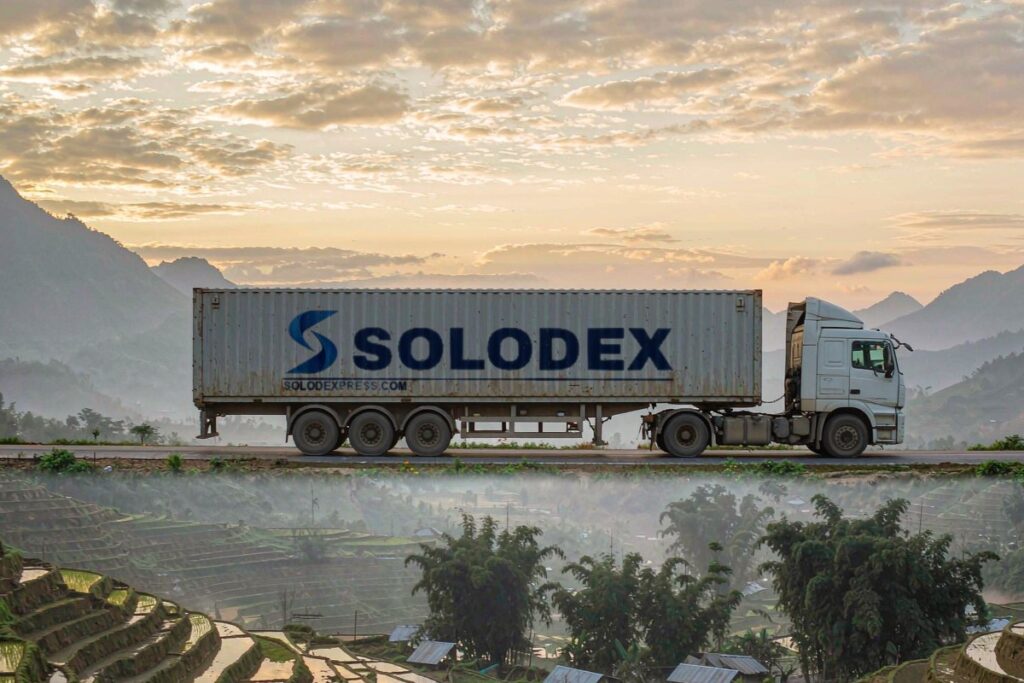
Three parcels leave Shenzhen in the same week. One buyer in Hanoi pays tax on a forty-dollar order for the first time. One in Bangkok finds the tax already added at checkout. One in Jakarta discovers the parcel is not taxable at all — it is simply not allowed in.
That is the state of Southeast Asia in 2026, and the reason the region resists a single summary. Three of its largest markets have closed the low-value door, but they used three different instruments: one deleted the threshold, one built a floor underneath it, and one never had a threshold worth the name and relies on permits instead. Knowing which mechanism is in play tells you what to fix; treating them as one trend tells you nothing.
Three ways to close a door
| Market | Instrument | What it now is | From |
|---|---|---|---|
| Vietnam | Repeal of the exemption | No value threshold — tax from the first dong on express imports | 18 February 2025 |
| Thailand | VAT first, then a duty floor | All imports from THB 1 taxed; combined burden at least 17% | 5 July 2024 (VAT), 1 January 2026 (duty) |
| Indonesia | Threshold kept very low, permits tightened | US$3 de minimis; the real gate is prohibition, NIB and SNI | Long-standing; new prohibited list 1 January 2026 |
Read the third column as a description of the mechanism rather than the amount. Vietnam’s change is arithmetic: everything is taxable, so the calculation is simple and unavoidable. Thailand’s is layered: a minimum rate applies whatever the product. Indonesia’s is documentary: the tax is nearly irrelevant because a large share of consumer goods cannot be imported on a parcel lane at all, however much duty you are willing to pay.
Vietnam deleted the number
For fifteen years Vietnam exempted express consignments valued at VND 1,000,000 or less — roughly US$39 — from import duty and VAT. Decision 78/2010 was written for a customs system that ran on paper, when manual processing made small-parcel assessment impractical. Decision 01/2025, effective 18 February 2025, repealed it outright.
There was no replacement threshold, no phase-in, and no new procedure: existing VAT law simply applies to goods it previously did not reach. The volume at stake was not marginal — low-value express imports in 2023 were estimated at VND 27.7 trillion, about US$1.1 billion, arriving in parcels that had never generated a tax line.
For a seller, the practical consequence is that the price on a Vietnamese marketplace listing and the price at the door are now different numbers, and that difference is a percentage of CIF rather than a rounding. The argument used to justify it was fairness rather than revenue: domestically produced goods carried VAT, imported parcels did not, and the gap was a price advantage that local producers could not match.
Thailand went the other way — and then further
Thailand’s sequence is the most instructive of the three, because it happened in two steps with a different instrument each time.
In July 2024 the country removed the VAT exemption on cross-border e-commerce consignments below THB 1,500. Duty was still waived under that line, so the effect was a seven per cent addition rather than a full assessment. Then, on 1 January 2026, the low-value import tax measures took effect and cancelled the duty exemption as well. Everything from THB 1 now carries both charges, with a combined burden of at least 17 per cent.
The design of the new rates is worth understanding, because it removes most of the room for classification games. Low-value goods pay a flat 10 per cent duty on CIF. Higher-value goods pay by tariff line, with fashion apparel and footwear reaching 30 per cent, bags and accessories 20, electrical goods 10. VAT is 7 per cent, charged on CIF plus duty — and 7 per cent is itself a temporary rate, extended again to September 2027 against a statutory 10.
The structural change, though, is not the rate: it is who collects it. Postal parcels have the amount printed on the box for the recipient to scan and pay. Couriers collect and settle. And from 22 December 2025, Thai Customs signed agreements with Lazada, Shopee, TikTok Shop, Temu and Shein to collect the tax at the point of sale. Once the platform is the collection point, the tax stops being a customs event and becomes a pricing input — which is a very different kind of problem for a seller, because it is visible to the customer before the order rather than at the door.
Indonesia: the tax was never the wall
Indonesia’s de minimis has been US$3 per consignment since 2020, down from US$75 — low enough that, in practice, almost every cross-border parcel is taxable. Below US$3 the duty and income tax are waived but VAT still applies, so “under the threshold” does not mean “no charge” even in the narrow band where it applies.
The bands above it are simple: US$3 to US$1,500 pays a flat 7.5 per cent duty plus VAT, and over US$1,500 the full tariff of 0 to 150 per cent by HS code applies. The sensitive categories carry their own rates — textiles 15 to 25 per cent, footwear 25 to 30, bags 15 to 20 — and the VAT rate, raised to 12 per cent in law from January 2025, is applied on an 11/12 base for most goods so the effective charge sits nearer 11.
None of that is what stops shipments. What stops them is the documentation around the tax.
- The importer identifier. A commercial consignee must have a valid NIB — the business identification number that functions as the customs ID. If it is missing from the invoice, the shipment is held and storage accrues daily. Personal consignments need an NPWP or national ID, and the absence of a tax number can push the income-tax withholding higher.
- The prohibited and restricted lists. Permendag 47/2025 took effect on 1 January 2026, replacing earlier rules with a broader preventive framework that applies inside free trade zones, special economic zones and bonded zones. Goods on that list cannot be imported by paying more duty.
- Pre-import approvals. Many categories that once needed only an ordinary import licence now require a technical recommendation before an import approval can be requested, which is a sequencing problem rather than a cost problem.
- Product certification. SNI conformity has expanded through 2025 and 2026 into appliances, children’s toys, lubricants and certain building materials; food, cosmetics and pharmaceuticals sit with BPOM, and Halal certification runs through BPJPH on a phased timetable.
That is the shape of the Indonesian barrier: a tax system that is merely expensive, wrapped around a permission system that is occasionally absolute.
What actually stops a parcel now
| Document | Who must hold it | Where it bites |
|---|---|---|
| NIB (business ID) | Indonesian consignee | Invoice; missing means held cargo and daily storage |
| SNI certificate and mark | Producer, via a registered body | Regulated categories; no certificate, no release |
| BPOM registration | Importer of the product | Food, cosmetics, supplements, medical devices |
| Halal certificate | Manufacturer, via BPJPH | Food, beverage, cosmetics on a phased deadline |
| Platform tax collection | Marketplace, for Thai imports | Applied at checkout from late 2025 |
| Value declaration per consignment | Sender and carrier | Every lane; the threshold is tested on CIF |
The pattern across all three countries is the same: the tax is becoming automated and visible, while the permission is becoming specific and preparable. One of those you can plan for in a spreadsheet. The other requires a document that takes weeks and belongs to someone else.
The habits that stopped working
Three routines survived the old regime and do not survive this one.
Consolidating to stay under a line. In Vietnam there is no line to stay under. In Thailand the duty is flat at 10 per cent on low-value goods, so bundling does not lower the rate — it simply moves the same percentage onto a larger base while saving one set of fixed fees. Only in Indonesia does a threshold still exist, and at US$3 it is not a planning tool. The broader argument in the case against splitting orders applies unchanged: the fees are per shipment, so splitting costs more and saves nothing.
Declaring a commercial parcel as a gift. A gift is a legal category, not a description, and every one of these markets now tests whether the value, the quantity and the pattern of shipments are consistent with personal use. A repeat shipment of identical SKUs to one address is the first thing a risk engine looks for, and the consequence is not a reclassification but a detention.
Assuming a low-value channel is a cheap channel. Thailand’s new collection model removes the distinction entirely: the tax is added at checkout, so there is no separate low-value route to arbitrage. Indonesia’s US$3 line is below the price of almost any real product, which means the “low-value” route is theoretical for commercial goods.
What to change before the next booking
- Work out the post-2026 landed cost, not the 2024 one. A Thai parcel priced on the assumption of a THB 1,500 exemption is now under-priced by at least 17 per cent of CIF — the same exercise that building a landed cost requires anywhere else, with a floor rather than a rate.
- For Indonesia, start with the permission, not the price. Confirm the HS code is not on the prohibited or restricted list, then confirm who holds the NIB and whether SNI, BPOM or Halal applies. No amount of duty planning fixes a missing certificate.
- Ask who collects the tax. In Thailand it may now be the platform at checkout, which changes both the customer’s perception and the seller’s cash flow. In Vietnam it is assessed at the border with no exemption to point at. The two produce different pricing conversations.
- Treat origin as a live variable. The same shift that changed Mexico’s rate structure in January is visible here in a milder form: where a good is made and where it ships from are being tested separately, and a regional warehouse does not automatically confer a regional rate.
- Recheck anything written before mid-2025. Vietnam changed in February 2025, Thailand completed its change in January 2026, and Indonesia replaced its prohibited-import framework on the same date. Guidance older than that is not conservative — it is wrong.
None of these markets is closed. They are priced, permitted and increasingly automated, and the difference between a smooth shipment and a stranded one is now almost entirely a matter of which of those three you prepared for.


