Eighteen thousand litres, three answers
A food manufacturer bought 18,000 litres of concentrated apple juice, 70 Brix, from a single production batch coded AJ-2409-C. The invoice named one seller, one buyer, one destination and one classification. Density at that concentration is about 1.30 kg per litre, so the net weight of the lot was roughly 23,400 kg, and the volume was eighteen cubic metres of liquid. None of those figures ever changed. The batch code never changed. The juice was never divided into a second lot.
Three different numbers were written down for how many things were shipped. The first booking put the lot into one 20 foot ISO tank, and the bill of lading was prepared with one tank as the package count. Before loading, the buyer asked for delivery in 1,000 litre units because the dosing line was built around that size, so the shipment was repacked into eighteen composite IBCs and the document was reissued as eighteen IBCs. Three weeks later, at a bonded warehouse near the destination, three of those IBCs were decanted into fifteen 200 litre drums for a small trial run. The delivery note for the final leg said fifteen IBCs and fifteen drums, thirty packages.
One tank. Eighteen IBCs. Thirty packages. The same 18,000 litres, the same 23,400 kg, the same AJ-2409-C, the same invoice and the same discharge pump. What moved was not the juice but the set of walls around it, and with each change of wall the number in the packages column had to be written again. Nobody measured the cargo a second time. Nobody weighed a single drum to find out how many packages there were. The count came out of the container list, not out of the liquid.
That is the odd thing about a shipment with no shape of its own. Ask how many things are in a thousand litres and the honest answer is that the question has no subject. A litre is a continuous quantity. A package is a discrete one. Somebody has to supply the discrete object, and in freight that object is always the container: a tank, a cage, a drum, a bladder inside a box. The cargo contributes volume and weight. The container contributes the integer.
The column asks for an integer
Transport documents are built around a small set of fields, and one of them insists on a whole number. It is variously called number of packages, no. of packages or pieces, and it cannot accept “18,000 litres” as an answer. A clerk can write a decimal in the gross weight column and another in the measurement column. The packages column wants a count of things that can be received, watched, marked and handed over one at a time. A liquid cannot be received one at a time. It arrives through a hose or a valve, continuously, and the only honest description of it while it moves is a rate, a level or a weight difference.
So the field is filled by proxy. Whoever chooses the container has already chosen the number that will go in it, usually without noticing. Choose a tank and the field says one. Choose 1,000 litre IBCs and it says eighteen. Choose drums and it says ninety. Choose a flexitank and it says one again, but the one now refers to a fitted container rather than to a tank. The decision looks like a packaging detail, and on a rate quotation it is presented as a line of equipment cost. On the document it is the entire answer to the question of how many things are being shipped.
This is why the pieces column behaves differently from the two columns next to it. Weight and measurement are continuous figures that a ship reads in two different units and never converts into each other: a heavy machine fills the deadweight column, a light one fills the space column, and both can be printed for the same consignment without contradiction. The pieces column is not a third physical quantity. It is a declaration of the counting unit. Two documents for the same lot can show the same weight and the same volume and still disagree about the count, because they are not describing the goods at that point. They are describing a decision made about walls.
There is a useful comparison in break bulk. When six steel pipes are strapped into one bundle, the tally drops from one hundred and forty-four to twenty-four because the hook lifts one bundle at a time. The count changes there too, and the goods do not. But every one of those twenty-four units is still made of steel pipe: the bundle is a quantity of the cargo, merely gathered up. In the juice shipment none of the three units is a quantity of juice. One tank, eighteen cages and thirty assorted containers are three counts of equipment, and the liquid is described elsewhere on the same page, in litres and kilograms, with a batch code that never varies.
A cage is not a quantity of juice
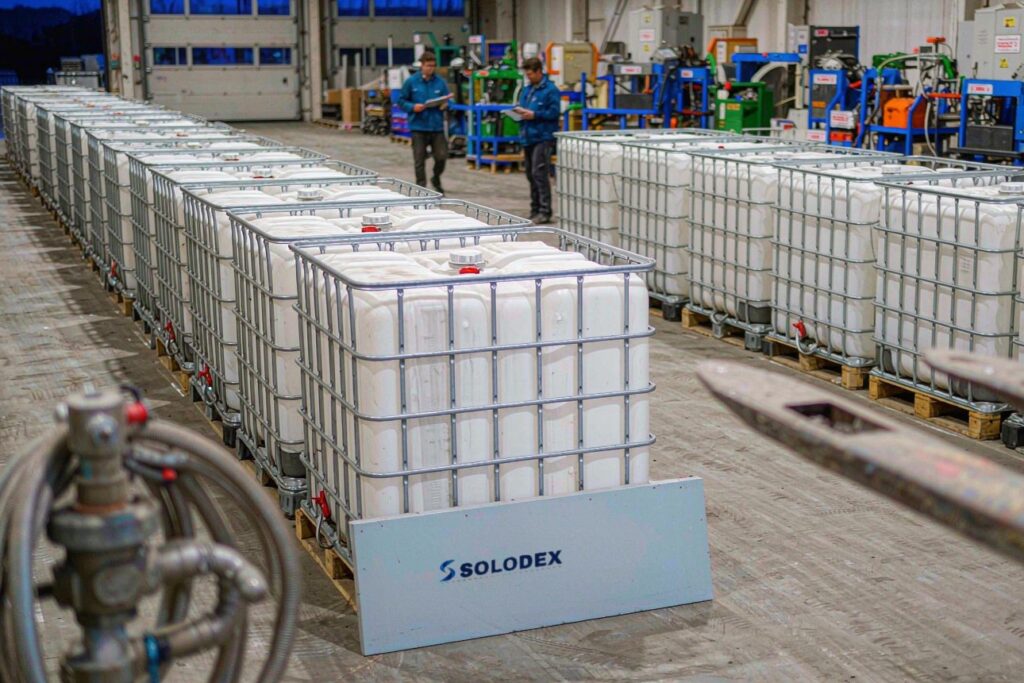
A composite IBC is an awkward object to classify, and that awkwardness is exactly what makes it interesting here. It consists of a blow-moulded plastic bottle held in a welded steel cage on a pallet base, with a top fill opening, a bottom valve and a small plate. It is designed to be used again. It carries a UN packaging code, a month and year of manufacture, a serial number, a tare and a rated capacity. Those marks describe the object, not what is in it. At the same time the IBC travels with the goods, is delivered to the buyer, and is counted as a package on the transport document. It is equipment that has been admitted into the count.
That is a different status from a carton, and a different status from a shipping container. A carton is consumed by the consignment; nobody keeps a register of its serial numbers. A container is hired for the voyage and returns to a pool; its number sits in a separate equipment field. The IBC sits in between. It is counted like a carton and identified like a container. “Eighteen IBCs” is therefore a sentence with two halves: eighteen is the number of cages, and the plate on each cage is the reason the number can be checked at all.
It helps to be precise about what is not being said. A flexitank asks a dry box to hold a sideways pressure its walls were never designed for, and the consequence is that the box number and its condition become physical facts about the cargo. That is a question about forces, and it is settled by a fitment report and a bulkhead. Nothing in the count column depends on hydrostatic pressure. An ISO tank carries the name of its last cargo, and the tank number is an index into a history that predates this booking. That is a question about time, and it is settled by a cleaning certificate. The IBC question is about neither. It is about how an integer gets attached to a continuous quantity, and it is settled by a list of plates and a batch label.
The other familiar liquid problems are absent too. Bracing inside a box, concentrated load on a container floor, rated gross weight, condensation in a sealed box, and the classification and quantity limits that apply to dangerous liquids all have their own answers, and none of them explains why the same lot is one piece on Monday and thirty on Thursday. Those are questions about what a container can safely do. This one is about what a container makes the paperwork say.
Eighteen serial numbers, one batch
Each of the eighteen IBCs carries two different kinds of writing, and they are easy to confuse because they sit a few centimetres apart. The manufacturer’s plate is permanent: a UN code, a serial number, a date of manufacture, a tare and a capacity. It says what object this is. The batch label is temporary: AJ-2409-C, a fill date, a net weight and a destination. It says what liquid is inside this particular object on this particular voyage. The plate belongs to the equipment file. The label belongs to the consignment.
The pieces column counts the plates. The identity of the goods is carried by eighteen identical labels. These two sets of numbers are not generated at the same moment, are not written by the same person and do not change together. A warehouse can replace a leaking IBC before loading: the lot is still 18,000 litres, the label is reprinted with the same AJ-2409-C, the count stays eighteen, and one serial number on the container list is no longer the one that was there yesterday. Nothing about the juice has changed. The equipment line has, and the document that lists the equipment has to be reopened.
| Stage in the same consignment | Packages written on the document | What one package counts | Where identity sits | What has to be reissued |
|---|---|---|---|---|
| Booked as one 20 ft ISO tank | 1 tank | One piece of hired equipment | Tank number and its certificate file | Nothing yet; the count is set by the booking |
| Repacked before loading into 18 composite IBCs | 18 IBCs | One steel cage with a plate | 18 serial numbers plus 18 identical AJ-2409-C labels | Packing list, bill of lading, container list |
| One IBC replaced for a leaking valve | Still 18 IBCs | Still one cage, but a different cage | 17 unchanged plates and one new serial number | Container list and the label register, not the invoice |
| Three IBCs decanted at a bonded warehouse | 15 IBCs + 15 drums, 30 packages | Either a cage or a drum; two units in one field | 15 plates, 15 drum marks, one shared batch code | Delivery note, warehouse transfer record, tally |
| Buyer doses the line in 1,000 litre units | Not used | Volume and batch, not packages | AJ-2409-C on the dosing record | Nothing on the transport documents |
| Returned empty IBCs go back to the depot | A new count on a new document | Empty equipment, not the lot | The same 18 plates, now with no batch label | Return leg documents, cleaning or disposal record |
Read down the second column and then down the fourth. The second column moves from one to eighteen to thirty and then out of use altogether. The fourth column stays with AJ-2409-C from the first row to the last, while the serial numbers beside it change once in the third row and lose their labels in the sixth. Two numbers that look like they describe the same shipment are in fact travelling on different clocks.
What the tally clerk cannot tick
In break bulk the count is made in public. A clerk stands at the rail, a sling comes over, a pencil makes one tick, and the number of ticks becomes the number on the bill. That is a real observation, and the whole reason a bundle counts as one is that the hook lifted it once. The test is physical: can this thing be lifted as one thing and can somebody watch it pass. If a container is strapped together at the factory, the count changes because the observation changes.
Apply the same test to a tank of juice and it produces a strange result. The tank is lifted once, but as equipment, with a crane and spreader, by people who never see the liquid. The liquid enters through a hose before the lift and leaves through a valve after it. If the goods are transferred to a second tank at the other end, no tick is made for the goods at all: the clerk records a tank number, a seal and a weight. The one in the packages column is therefore not one observation of cargo. It is one observation of an object that happens to be carrying cargo.
Eighteen IBCs sit closer to the ordinary case. They can be counted one by one, marked, photographed, and lined up on a warehouse floor. A tally clerk can put eighteen ticks on a sheet and feel that the goods have been counted. But the ticks are on cages. A clerk who wanted to count the juice would need a flow meter, a scale or a level gauge, and would produce a number in litres or kilograms that no packages column would accept. “Can be ticked” and “is a quantity of the cargo” are two different properties, and the IBC has the first without the second.
This is also why a packing specification does more than protect the goods. In an earlier piece in this series, the specification was read as a stowage parameter, a statement about where a thing may be placed and what may be stacked on it. Here the same line of the specification is a count generator. Write 1,000 litre composite IBCs and you have written eighteen. Write 200 litre drums and you have written ninety. The specification is not a description of how the lot is protected. It is the arithmetic that produces the integer in the packages column.
The repack is where the number changes
The interesting moment is not the booking. It is the decanting. By the time the bonded warehouse opens the first IBC, a bill of lading already exists with a count on it, a carrier has already received something against that count, and a consignee has already been named. The repack does not edit that page. It creates a second page with a different count for the same lot, and the two pages are issued by different people, in different countries, weeks apart, for different purposes.
So the count has an owner at each step, and the owners do not meet. The exporter or the forwarder sets it when the booking is made. The warehouse sets it again when it decides how many IBCs to keep and how many drums to fill. The buyer never sets it at all, because the dosing line asks for a thousand litres and a batch code, not for a number of packages. A packing list is a plan for how a consignment will be handled, and it is written before the handling happens. When the handling changes halfway through, the plan is still true about the first half and no longer describes the second one.
There is a practical consequence beyond tidiness. A count is also the number of hand-over units the carrier and the warehouse will later account for. One tank is one unit to receive, one unit to check and one unit to release. Thirty packages are thirty units, each of which can be present, absent, damaged or substituted on its own line. Changing the container does not merely change a digit. It changes how finely responsibility for the same 18,000 litres has been sliced, and it does so without anybody touching the liquid.
None of this requires a mistake. The exporter chose a sensible unit for the buyer’s dosing line. The warehouse chose a sensible split for a small trial run. The buyer chose a sensible way to feed the line. Each decision is locally reasonable and each is recorded somewhere. The difficulty appears only when somebody tries to read the pages as one continuous description of one consignment, which is exactly what a document mismatch check is supposed to do. Two correct integers, one lot, and no line that joins them.
Two documents, one lot, two counts
Three people hold three different numbers. The carrier holds the count on the bill of lading, and will answer questions about the units it received. The warehouse holds the container list, with eighteen or fifteen serial numbers and the marks on fifteen drums. The buyer holds a dosing record in litres and a batch code, and has no use for a package count at all. Each number is right where it is used. None of the three sheets was designed to be read beside the other two.
What is missing is not a conversion. There is no formula that turns one tank into thirty packages, because the ratio depends on what the warehouse did on a particular afternoon. What is missing is a record of the operation that connects them: a transfer note stating that the contents of one tank were filled into eighteen numbered IBCs under batch AJ-2409-C, and a second note stating that three of those IBCs were emptied into fifteen numbered drums from the same batch. With those two notes, one and thirty are two readings of one history. Without them, they are simply two numbers on two unrelated pages.
That gap is different from the one in a tank history file. There, the missing item is a comparison: somebody has to read the previous cargo next to the new product name, and no document assigns that comparison to a person. Here, the missing item is a bridge between two integers that were both written down correctly. The tank problem is about a name that is not on the page. This one is about a number that is on two pages and is not the same number. One needs a reader. The other needs a line.
It is worth noticing how quietly the gap opens. A leaking valve replaces one cage, and the container list is updated. Three IBCs are decanted for a trial, and a delivery note is typed. A return leg is booked for the empties, with its own count and its own documents. Each update is small, complete and internally consistent. By the end of the month the file contains six documents, four different package counts and one batch code, and the only thing that holds them together is AJ-2409-C printed on labels that have since been peeled off.
What to check before the count is printed
The whole problem reduces to three fields, and they can be compared in a few minutes before a document is issued. Take the package count and the packaging description from the bill of lading. Take the container list from the packing list, with the serial number of every IBC or the mark of every drum and the batch label attached to each. Take the transfer or delivery record from the warehouse, with the count it uses for the final leg. Put them next to each other and read across.
Three mismatches are visible immediately, and none of them needs a regulation to interpret. The counts disagree and no transfer note explains the difference. A serial number appears on the container list but not in the warehouse record, or appears twice. A unit is present on the delivery note but carries no batch label, so its contents cannot be tied back to AJ-2409-C. These are comparisons of strings and integers, and the person coordinating the booking can make them without asking anybody to judge the liquid.
The order matters. The container is chosen first, the integer is written second, and the rest of the file inherits both. Once a count has been printed on a transport document, changing it is not a matter of correcting a digit; it is a matter of reopening the chain of documents that quoted it. Choose the walls deliberately, then write the number. There is one further case where even this is impossible: a dry bulk cargo has no packages at all, and its quantity is read back from the change in the ship’s draft rather than from anything that could be counted. That shipment solves the same problem by removing the column entirely.
So the answer to the question in the title is not one, eighteen or thirty. A thousand litres contains no number of things until somebody supplies a thing to count. The tank, the cage, the drum and the bladder each lend the liquid a different outline, and the packages column records the loan rather than the goods. Change the outline and every sheet that quoted it has to be written again, while the volume, the weight and the batch code sit untouched in their own columns, describing a liquid that never noticed.
The boundary is not a property of the cargo. It is borrowed, and when the container changes, the paperwork has to be written again.
One lot of juice can be one tank, eighteen cages or thirty packages because the integer comes from the container; bulk cargo removes the container from the transaction, and with it the integer entirely.
One lot of juice can be one tank, eighteen cages or thirty packages because the integer comes from the container; on an empty return there is no integer at all, and the heel survives only as a subtraction from the plate tare.
IBC counts show that the piece is a packaging decision; the same logic runs through parcel networks, where a pallet becomes one piece and three cartons stop being counted.


