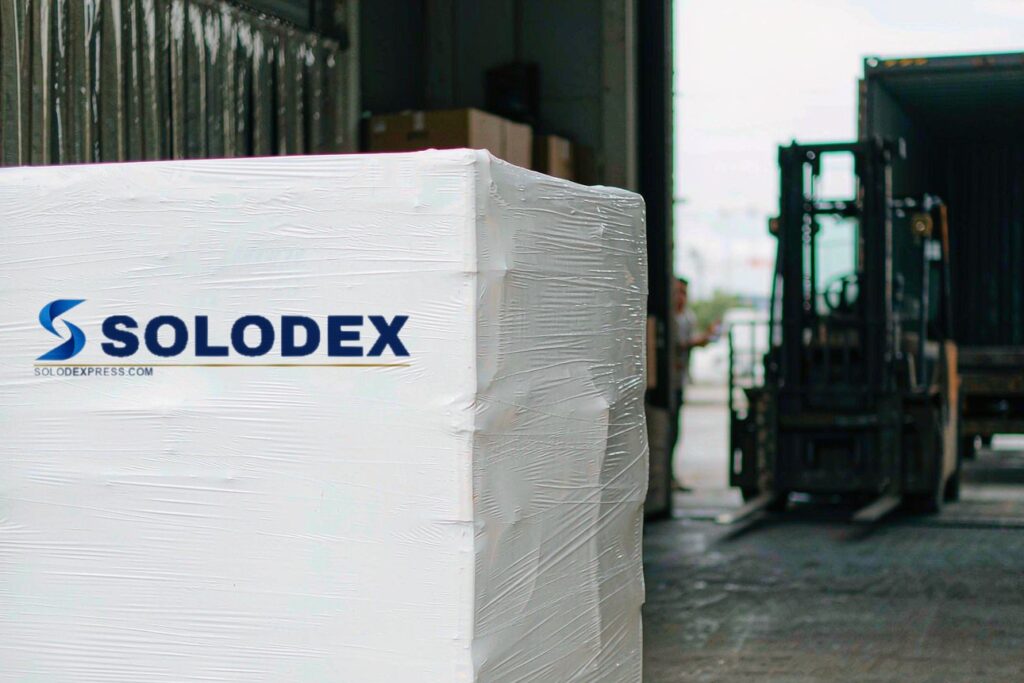
The container that was loaded, then emptied
The truck arrived at the factory at seven in the morning, the container was spotted at the ramp, and the crew began loading. By eleven it was full. At half past eleven an inspector from the appointed conformity company arrived, looked at the first three pallets, and stopped the job.
The goods were not counterfeit, dangerous, or misdeclared. They were the wrong version: the model on the pallets was the export variant, and the product registration covered the domestic variant. Same family, same factory, different model code. Under the pre-export verification scheme, that difference is the whole question, and the answer was no.
So the container was emptied. Not at the port, not at destination — at the factory, four hours after it was filled, because the inspection happens before shipment and the only place a nonconformity can be fixed is where the goods still are. That is the defining feature of the Kenyan regime, and it is the reason a shipment can be saved at eleven in the morning by somebody who bothered to check a model code.
IDF first: the declaration that has to exist before the ship
Kenya’s import process begins with an Import Declaration Form, lodged by the importer through the national single window before the goods are shipped. The IDF carries the commercial details — importer, supplier, goods, value, terms — and it is the reference document that the customs system, the standards body and the port all read against.
Two properties matter. First, the IDF is required before shipment, not before arrival. A consignment that leaves without one is not a consignment waiting for a form; it is a consignment arriving into a process that has no slot for it. Second, the IDF has a validity window, and a shipment that slips beyond it needs to be extended while the cargo is in motion — an administrative task that is much easier to do from a desk in Nairobi than from a terminal in Mombasa.
This is the same structural point that Nigeria makes with its Form M, arrived at differently: the first document is created by the buyer, in the buyer’s country, before the seller’s factory has finished packing. Nigeria ties that document to foreign exchange. Kenya ties it to the single window and to the conformity process, because the IDF number is what the pre-export verification is issued against.
PVoC is a pre-shipment assessment, not a border inspection
The acronym expands to pre-export verification of conformity, and every word in it is doing work.
Pre-export. The assessment happens in the country of supply, before the goods are loaded. It is not a sample taken at the destination quay; it is a decision made while the goods are still accessible, still reworkable, and still in the same country as the factory that made them.
Verification. Not testing for the sake of testing, but checking that the goods correspond to a conformity position that already exists — a registration, a test report, a licence — and that the consignment is what the paperwork says it is.
Of conformity. The subject is the product’s compliance with the applicable standard, not the quality of this particular batch. A consignment can be well made and still fail, because the model is not covered.
The practical consequence is that the inspection is a gate on loading, not a gate on unloading. A container that fails at the port can sometimes be rescued with a waiver, a re-inspection, or a payment. A container that fails at the factory simply does not leave, and the cost is a delayed shipment rather than a stranded one — provided the failure is discovered before the vessel sails.
Which is why the timing of the inspection matters more than the outcome. An inspection booked for the day of loading can only produce a yes or a no. An inspection booked three days earlier can produce a list of what to change.
What the inspector actually does is unglamorous: compares the cartons against the certificate, reads model codes off the labels and the nameplates, checks that the marks and the language on the packaging match what was registered, and takes a sample for testing when the route requires it. None of that is a laboratory exercise, and all of it depends on the goods being visible, unpacked and accessible. In a container that is already sealed and on a chassis, the same check becomes a decision about whether to break the seal — which is why the inspection belongs at the ramp, not at the terminal.
Two routes, and what they cost in time
Kenya’s scheme offers more than one way to demonstrate conformity, and the choice shapes the calendar as much as the cost.
| Route | What it requires | Lead time | When it makes sense |
|---|---|---|---|
| Registered or licensed product | A registration supported by test reports from an accredited laboratory; the consignment is then verified against it | Weeks to establish, days per shipment afterwards | Repeat shipments of a stable product; the default for a brand selling continuously |
| Consignment-by-consignment | Testing or inspection of each shipment, without a prior registration | Days to weeks per shipment, variable | One-off orders, trials, products that change frequently |
| Waiver or exemption | A specific approval for goods outside the regulated scope, or a documented exception | Unpredictable | Genuinely exempt goods — not as a shortcut for a product that should have been registered |
The trade-off is familiar from every conformity regime in this series: pay once for a registration and move quickly afterwards, or pay per shipment and accept the variance. What is specific to Kenya is how visible the variance is, because the verification sits immediately before loading. A consignment route that goes wrong does not produce a delay at the border; it produces a truck that leaves the factory empty and a vessel that sails without the container.
The certificate at Mombasa
When the verification succeeds, a certificate of conformity is issued for the consignment. That certificate is what the clearing process expects, and its absence is not a technicality.
A consignment without a certificate faces one of three outcomes, and none of them is cheap. It can be subjected to destination inspection, which means testing at the importer’s cost and time, with the goods held meanwhile. It can be rejected, in which case the goods are re-exported or destroyed. Or it can, in limited circumstances, be released against a waiver — but a waiver is a decision someone makes about your cargo, on a timeline you do not control.
Meanwhile the container is at a port that charges for storage, and the shipping line is charging for the box. The remedy is not exotic: lodge the entry before the vessel berths, so that the certificate, the IDF and the assessment are already matched when the container is discharged. Importers who do this treat clearance as a queue they joined early; importers who do not spend the first week of storage assembling documents that could have been assembled at sea. The financial shape of a failure here is the same as in Nigeria: the duty is the small number, and the time is the large one. The charges that accumulate are ordinary port charges, applied to an extraordinary situation.
Where it breaks
Four failure patterns account for most of the trouble, and all four are visible before loading if anyone looks.
Model coverage. The registration names a model. Factories produce variants — voltage options, plug types, packaging languages, firmware versions — and each variant may or may not be covered. The most common surprise is a variant produced for a different market, shipped to Kenya because the buyer wanted that configuration.
The age of the test report. Registrations rest on test reports, and reports have a shelf life. A product that has been in the catalogue for four years may be riding on a report that the laboratory would no longer issue today, and a verification agent is entitled to ask for a current one.
The split consignment. One order, two containers, two sailing dates. Verification is per consignment, so the second container needs its own certificate — the same trap that a rolled container creates in the Gulf, arrived at through a different mechanism.
The misread scope. Not every product is regulated, and the boundary is not intuitive. Importers sometimes obtain a certificate for goods that did not need one, and sometimes assume exemption for goods that did. The list is published; reading it is cheaper than guessing.
There is a fifth, quieter failure: the certificate is issued for a consignment whose contents then change. A late addition of two pallets from a different production run, a substitution because stock ran short — both are ordinary commercial behaviour and both invalidate the paperwork that was issued for the original consignment. Whichever Incoterm governs the sale, the certificate attaches to a declared shipment, not to an intention.
Five checks before you book
Is the product in scope, and is there a registration covering this exact model? Read the registration, not the specification sheet. The model code on the certificate has to match the model code on the pallet.
When was the supporting test report issued, and would it still be accepted? A registration that exists but rests on stale evidence is a registration waiting to be questioned.
Is the inspection booked early enough to be useful? Three days before loading, not the morning of. The value of a pre-shipment inspection is the time it leaves to fix what it finds.
Will the shipment stay one consignment? If a split is possible — because of volume, or because vessels get rolled — plan for a second certificate and know who pays for it.
Who holds the IDF, and does it match the invoice? The IDF number is what everything else references. A mismatch between the IDF and the final invoice is the Kenyan version of the description drift that stalls containers in Lagos.
Kenya’s regime is unusual in this series because it moves the decisive moment earlier than the port and earlier than the certificate: it moves it to a factory floor, on a Tuesday morning, with a container already half loaded. That is uncomfortable for anyone who plans backwards from a sailing date, and it is a gift to anyone who plans backwards from a loading date. India and Saudi Arabia both punish late paperwork at the border. Kenya punishes it at the ramp, which is earlier, cheaper, and much easier to avoid. Egypt moves the checkpoint earlier still — to the booking counter, where a carrier refuses the box for want of a number. The importer — the entity named on the IDF — is the only party who can decide to start the process in time.
This market is one of eight compared side by side in the compliance file comparison — what each authority asks first, and which clock decides the launch date.
Pre-shipment conformity files decide which consignments clear at the destination, and therefore which ones the station can strip first; see PVoC and the IDF.


