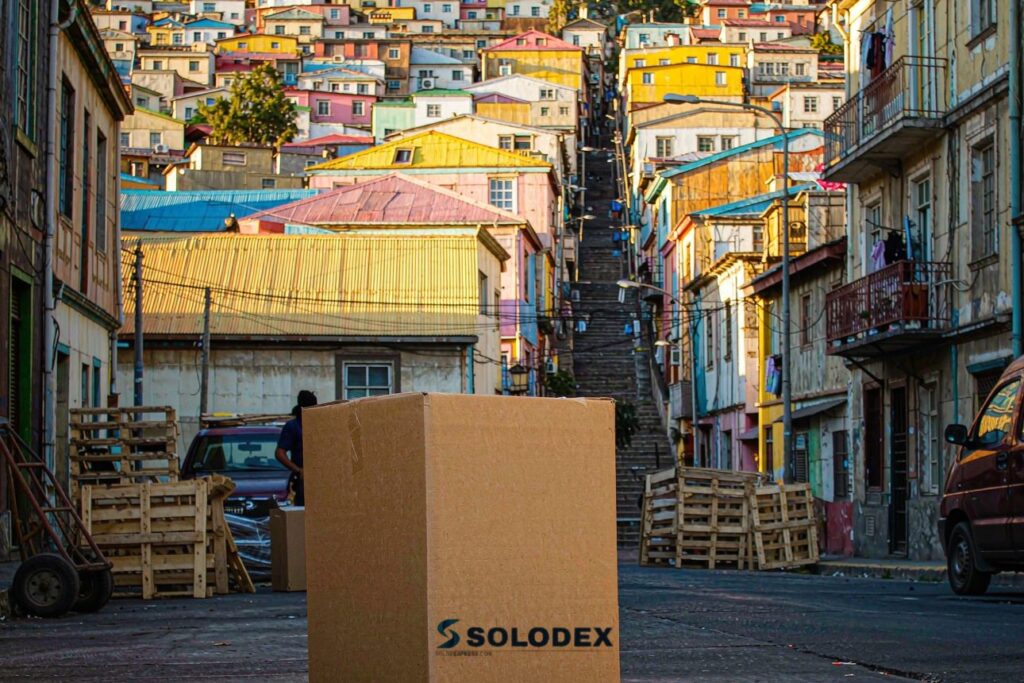
Zero duty, wrong plug
The entry came out at zero. The product qualified under the agreement, the certificate was in order, and the duty line on the liquidation read nothing at all. Then the container stopped, because the plug on the appliance had two round pins and Chile uses three.
That is not a labelling problem or a paperwork problem. It is a hardware problem, and it cannot be fixed by a declaration. The plug is part of the electrical safety approval, the approval is a condition of sale, and the only remedy is a different cord set — which means a different SKU, a different carton and a different certification, on goods that are already on the quay.
Chile is the cleanest illustration of something this series keeps returning to: the tariff is the visible number and the least interesting one. A market can tax nothing and still refuse the goods, and the reason will be a component worth less than a dollar.
The country that joined the union without joining it
Chile has been an associated state of the southern customs union since the 1990s and has never been a member of it. The distinction is not diplomatic. Associate status gives preferential access without adopting the common external tariff, which means Chile sets its own rate for the rest of the world and negotiates its own agreements — and it has negotiated a great many.
That choice produces a third model, different from both of the ones this batch has already covered. The northern agreement is a free trade area among three countries with one shared set of origin rules and no common external tariff. The southern union fixes one tariff at the bloc’s edge and asks an origin question inside. Chile does neither: it keeps its own tariff, signs bilateral and plurilateral deals with everyone who will have it, and answers each shipment under whichever agreement applies.
The practical difference is that there is no single “Chilean” origin rule. There is the rule in the China agreement, the rule in the agreement with the United States, the rule in the Trans-Pacific arrangement, the rule in the agreement with the European Union — each with its own certificate, its own criteria and its own issuing authority. A supplier who has learned “how to do Chilean origin” has learned one of about thirty things.
Six per cent, and the agreements that erase it
The general tariff is six per cent, applied to the customs value. Most goods from most origins arrive at zero instead, because an agreement covers them, and the difference between paying six and paying nothing is entirely a question of whether the right certificate exists at the time of entry.
The certificate is not self-declared and it is not issued by a chamber on a whim. Under the China agreement it is issued by the competent authority on the Chinese side, against the exporter’s documentation, and it must match the shipment: consignee, description, quantity, tariff classification. A certificate that describes the goods differently from the invoice is worse than no certificate, because it converts a duty question into an origin question, and origin questions are answered by examining the goods rather than the paperwork.
The base rate still matters for two reasons. Goods outside every agreement — a category that shrinks each year but has not vanished — pay it. And the six per cent is part of the taxable base for value added tax, so a classification that moves a product into a duty-free line changes the VAT calculation as well. The tariff is small; its footprint in the total is not.
Three certificate models, one container
It is worth putting the three systems side by side, because the same factory will meet all of them and will be tempted to reuse the file.
In the north, nobody issues anything: the importer writes a certification, keeps the evidence for years, and defends it later. In the southern union, an industry body in the exporting country issues the certificate before shipment, and the importer cannot proceed without it. In Chile, the certificate comes from the exporting country’s authority under a specific agreement, and the agreement determines what the certificate must say.
The common failure is generic paperwork. A certificate of origin issued for one destination is not transferable to another, even when the product, the factory and the buyer are identical, because the criteria and the form belong to the agreement rather than to the goods. Suppliers who keep “a certificate of origin” in a folder and send a copy with every shipment eventually send the wrong one, and the error surfaces at the worst point: after the vessel has sailed and the buyer has already quoted a landed cost.
One habit prevents most of it. Treat the origin document as an output of the order, not of the product — generated per shipment, checked against the invoice line by line, and never copied from a previous file because the goods look the same. Which instrument each market actually asks for is set out in the comparison across eight markets; this article is about the one market that asks a different question for every agreement.
SEC, and the part that stops a SKU
Electrical products sold in Chile require approval from the electricity and fuels authority, obtained through accredited laboratories and certification bodies, and marked accordingly. The scope is defined by product category and it covers most of what a consumer plugs in.
Two details inside that requirement decide more commercial outcomes than the certification itself.
The first is the plug. Chile uses a three-pin configuration that is not the European two-pin, not the North American blade and not the British arrangement. An appliance built for another market needs a cord set for this one, and the cord set is inside the approval — so a product that is certified elsewhere is not certified here, and a product certified here with the wrong cord is not compliant. The part costs a few dollars. Changing it after the mould is cut costs a season.
The second is the family question. Approvals are granted per product and per model, and a range built on one electrical platform can sometimes be covered together — but the grouping is decided by the certifier against the construction, not by the marketing plan. Which means the number of SKUs is a certification decision, taken at the specification stage, in the same place where the light source and the driver are chosen. Suppliers who fix the range first and ask about approval second pay for every variant separately.
The free zones are deferred, not exempt
Chile runs free zones at the northern and southern ends of the country, and they are widely misunderstood by exporters who hear “free” and stop listening. Goods entering a zone are not subject to duty at that moment. They are subject to record-keeping, to controls on what may be done inside, and to duty when they leave for the national territory.
What the zones actually buy is time and optionality: stock held near the market without paying duty until it is sold locally, or re-exported without ever entering the customs territory. For a distributor managing several South American markets from one warehouse, that is valuable. For a supplier who assumed the zone removes the requirement to comply, it is a surprise — product rules, electrical approval and labelling still apply to anything that enters the national market, whenever the duty is eventually paid.
The same distinction applies to the tariff. Deferral is a cash-flow instrument. It does not change the rate, and it does not change whether the goods may be sold once they leave.
Six cases, and which door each one has to pass
The table separates the three doors — customs, electrical approval, labelling — because clearing one is routinely mistaken for clearing all.
| Product | Customs | Electrical approval | What usually fails |
|---|---|---|---|
| Mains-powered kitchen appliance | Zero under an agreement, if certified | Required, with a Chilean cord set | Plug and cord set from another market |
| Low-voltage lamp with external driver | Zero under an agreement | Required for the driver as a separate product | Certifying the lamp and importing the driver separately |
| Battery-powered tool, charger included | Zero under an agreement | Charger in scope, tool usually not | Treating the pair as one approval |
| Textile home goods | Zero under an agreement | Not applicable | Spanish labelling and fibre content |
| Goods stored in a free zone | Deferred until national entry | Still required on national entry | Assuming the zone suspends product rules |
| Spare part shipped after the machine | Zero, but needs its own certificate | Depends on whether it is in scope | Reusing the machine’s documents |
Read the third column and the pattern appears: the approval attaches to the thing that connects to the mains, not to the thing the customer thinks they bought. That is why lamp-plus-driver and tool-plus-charger keep producing the same surprise in every market, and why the fix belongs in the product architecture rather than in the file.
The long pole is the cord set. It is a five-dollar component that decides whether an approved product can be sold, it sits inside the approval rather than beside it, and it is chosen at the drawing stage by somebody who is usually thinking about the European or American buyer. Mexico’s version of the same problem is a certificate and a label; Chile’s is a plug. In both cases the tariff was never the obstacle, and in both cases the obstacle was decided months before anyone asked about the duty.
Chile is the easiest market in the region to enter on price and one of the harder ones to enter on hardware. The agreements do the work everyone talks about. The three pins do the work nobody plans for.
The permission that has to exist before any of this is checked is the importer’s own registration, and it belongs to a company rather than to a shipment.
Where a single importer record covers the consolidated entry, the per-consignment formalities shrink; Chile is one such market in its customs guide.


