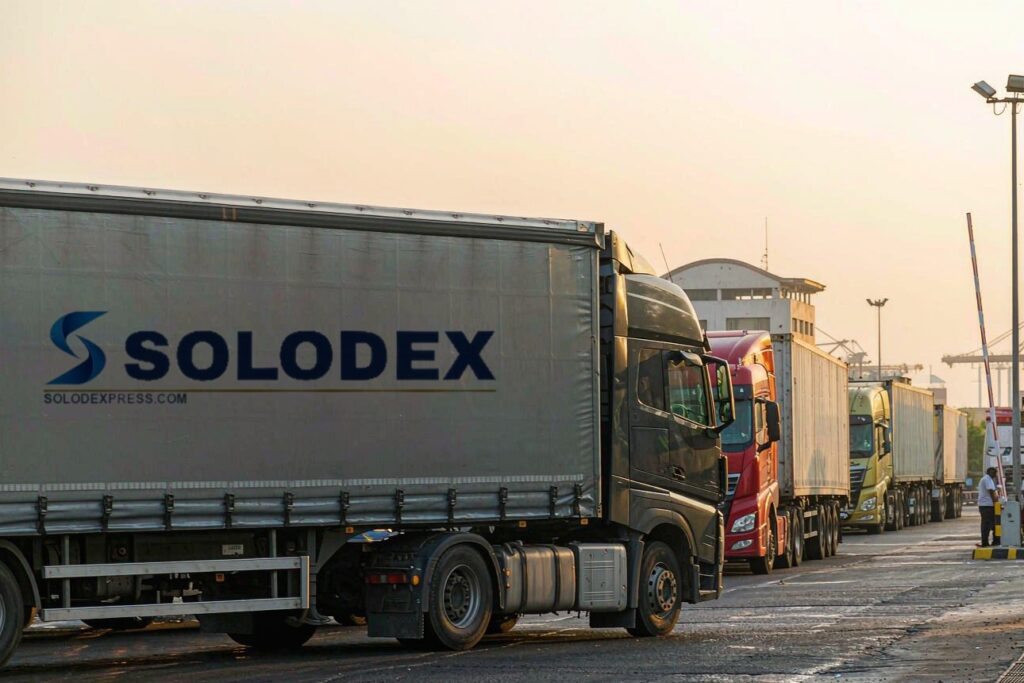
One word on a form
The Form M said “LED lamps”. The commercial invoice said “LED lighting fixtures”. Same goods, same HS heading, same factory, same container — two different descriptions on two documents that a bank, a customs system and a terminal all read separately.
The mismatch surfaced at the point where it always surfaces: when the pre-arrival assessment was requested. The assessment could not be issued against documents that described the cargo differently, so the container sat at Apapa while three parties argued about wording. It sat for twenty-two days. The duty on the goods was a few thousand dollars. The terminal and shipping-line charges were not.
What makes this case worth starting with is not the mistake — clerical mismatches happen everywhere — but the fact that the mistake had three weeks of consequences in a system where the first document was created before the goods were even packed. The importer had done the hard part: found a supplier, agreed a price, arranged freight. What he had not done was treat a bank form as an operational document.
Form M is an FX document, not a customs document
This is the single most useful sentence about importing into Nigeria, and it is routinely misunderstood by exporters who assume it is a local variant of an import declaration.
A Form M is opened by the importer, through an authorised dealer bank, before the goods are shipped. It registers the transaction: who is importing, from whom, what the goods are, what they are worth, how they will be paid. It exists because Nigeria manages foreign exchange, and the state wants to know what foreign currency is leaving the country and for what.
Customs is a downstream reader of that document, not its author. The bank approves it; the trade portal validates it; the customs system consumes it. If the Form M is not opened, there is nothing for the subsequent steps to attach to — and no amount of correct customs paperwork at the port can substitute for it.
That produces a failure mode which is unique in character among the markets in this series. In India or Saudi Arabia, a missing certificate stops the goods at the border. In Nigeria, a missing Form M can stop the goods before they are loaded, because the supplier cannot obtain the documents that depend on it — and if it is discovered after loading, the goods arrive at a port that has no basis on which to assess them.
Two practical consequences follow. First, the Form M has a validity window, and a shipment that slips beyond it needs an extension before arrival, not after. Second, the description on the Form M becomes the reference description for everything downstream — which is why the story at the top of this piece happened.
PAAR is the number the terminal waits for
The Pre-Arrival Assessment Report is what the name says: an assessment of duty, produced before the vessel arrives, on the basis of the Form M and the shipment documents. It carries a reference number, and that number is what allows a container to be cleared rather than merely landed.
The sequence matters. The bank opens the Form M. The supplier ships and provides the final documents. The importer’s agent applies for the PAAR, attaching the invoice, packing list, bill of lading and — for regulated products — the conformity certificate. Customs issues the assessment. Only then can duty be paid and the container released.
Nothing in that sequence is unusual. What is unusual is the penalty for getting it wrong, because Nigerian ports are expensive places to store things and the charges are not symmetrical with the value of the cargo. A PAAR that arrives four days late does not cost four days of freight; it costs four days of terminal storage plus four days of container hire, both charged by the day, both accruing against the party named on the transport document.
The PAAR also has a validity window of its own. A shipment that is assessed and then delayed — because the vessel is rolled, or the terminal is congested — can arrive with an assessment that has expired, and the process starts again from the documents. This is the reason experienced importers treat the assessment as something to be requested close to arrival rather than as early as possible: too early is its own risk.
SONCAP happens before shipment, not at the port
For regulated products, Nigeria requires conformity certification under SONCAP, and the structure will be familiar to anyone who has read the Saudi piece: a product-level certificate and a shipment-level certificate, issued through accredited conformity bodies.
- Product certificate. Obtained for a product or product family on the basis of test reports from an accredited laboratory, and valid for a period. It is the expensive part, and it is reusable.
- Shipment certificate. Obtained per shipment, referencing the product certificate, the invoice and the consignment. It is the routine part, and it is what the clearing agent presents.
The critical word is before. The shipment certificate is issued before the goods leave the exporting country. A container that arrives without it is not a container with a paperwork problem; it is a container that cannot be cleared, and the options are re-export or abandonment — the same cliff edge as the Gulf, arrived at from a different direction.
This is also where the inspection industry earns its fee. A conformity body issuing a shipment certificate is putting its name on a statement that the goods in this container match the certified product. Where the product is simple and the factory is consistent, that is a documentary exercise. Where the product is configurable — electronics with options, machinery with attachments — it becomes an inspection, and the inspection has to happen while the goods are still in the factory or the warehouse, not on a quay in Lagos.
The alignment problem: four documents, one description
Nigeria is not harder than its neighbours because of the rules. It is harder because four documents, produced by four different parties, have to describe the same goods in the same words.
| Document | Who produces it | When it is needed | If the description drifts |
|---|---|---|---|
| Proforma invoice | Supplier | Before the Form M is opened | Form M is opened against the wrong description, and everything downstream inherits it |
| Form M | Importer, through its bank | Before shipment | No basis for assessment; extension or amendment, with the vessel already at sea |
| SONCAP certificate | Conformity body | Before shipment | Goods cannot be cleared on arrival; re-export or abandonment |
| PAAR | Customs, on application | Before arrival | Container cannot be cleared; storage and hire accrue daily |
Read the third column downwards: every one of these documents is required before a physical event that has already been scheduled. The vessel does not wait for a bank, the terminal does not wait for an assessment, and the shipping line does not suspend container hire while an invoice is being corrected.
The alignment problem is therefore not a documentation problem in the ordinary sense. It is a sequencing problem, and the only reliable fix is to freeze the description once, at the proforma stage, and propagate it verbatim — same noun, same qualifiers, same units — into the invoice, the packing list, the Form M application and the conformity application. A supplier who “improves” the description on the final invoice, because the commercial invoice template in their ERP uses a different product name, has broken the chain at its weakest link.
What the delay actually costs
Importers new to the market budget for duty and freight, and are surprised by the third line: time at the port.
Nigerian terminal and shipping charges are not designed to be absorbed by small importers. Storage is charged per container per day after a free period, container hire runs separately, and both continue until the box is either released or returned. A three-week delay on a container of consumer goods can produce charges that are a meaningful fraction of the goods’ value (the same family of charges that appear in every market, at a different order of magnitude), and they are billed to the party on the transport document — which is the importer, whatever the sales terms say.
This is why the Incoterm matters less than it looks in this market. Under DDP the seller nominally carries the risk, but a seller who cannot open a Form M — because that requires a Nigerian entity and a bank relationship — will not be the party resolving the delay. The cost lands where the container lands.
There is a second-order cost that is easier to miss: the bank. FX is allocated against the Form M, and an importer whose documents are repeatedly queried develops a reputation with its bank that is not visible in any system but is very visible in processing times. The same is true at the customs end, where an agent with a history of mismatched declarations gets a slower, more manual process on every subsequent file.
Five checks before you quote
Who is opening the Form M, and do they have the bank relationship? If the buyer is new, the answer may be “nobody yet”, and that is a lead-time problem you need to know about before you promise a delivery date.
Is the product on the regulated list, and is there a valid product certificate? Ask for the certificate number and the product description on it. A certificate for a similar product is not a certificate for this one.
Is the description identical across proforma, invoice, packing list and applications? Freeze it, and check it character by character. This is the cheapest control in the entire process and the one that fails most often.
Who applies for the PAAR, and when? Close to arrival, not months ahead — the assessment has a validity window, and an early assessment can expire before the vessel berths.
Who pays for time at the terminal? Write it down in the sales contract, and make sure the party who pays is the party who can actually produce the documents. In this market those two are frequently different companies, and the gap between them is measured in demurrage.
Nigeria rewards the same discipline as the other markets in this series, applied earlier and more literally. The documents are not difficult; they are sequential, and each one is written before an event that cannot be postponed. The Gulf teaches that certificates precede shipments. India teaches that registrations precede products. Nigeria teaches the same lesson one step further upstream: the money has to be authorised before the cargo can be described, and the cargo has to be described identically in four places before it can move. Kenya moves the same gate earlier still — to a factory floor, with a container half loaded and an inspector reading model codes off the pallets. The entity doing the importing is the one that owns all four steps, whether or not it realises that on day one.
This market is one of eight compared side by side in the compliance file comparison — what each authority asks first, and which clock decides the launch date.
A consignment can be physically stripped yet unavailable until its own documents close; Form M and SONCAP are the classic case of a paperwork clock running after the box is open.


