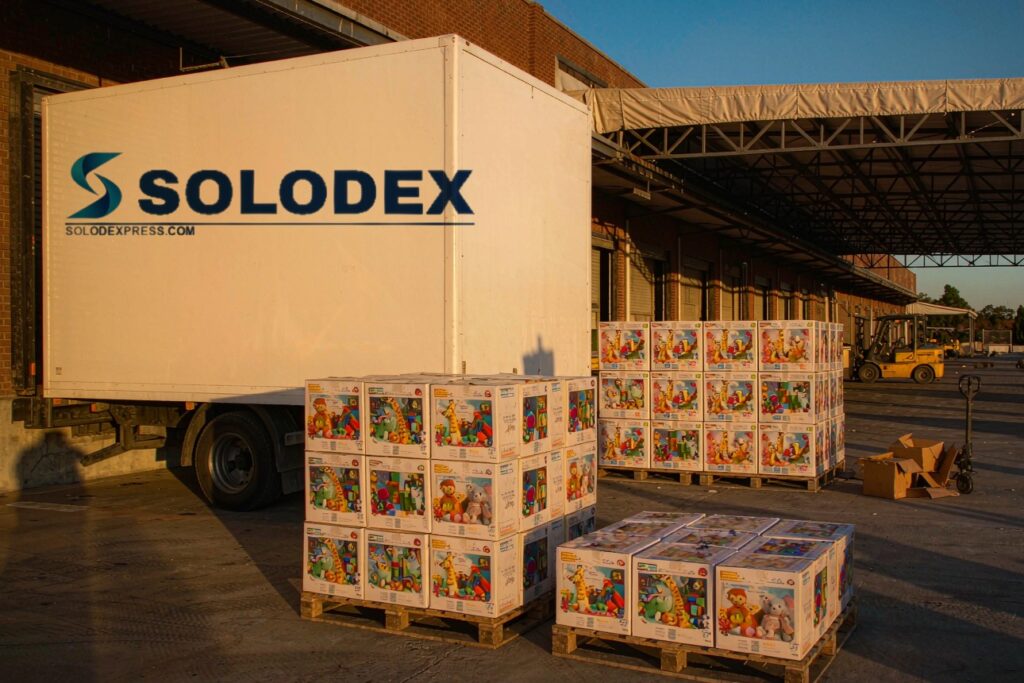
A plush bear marked 3+ and the same bear marked 0+ are identical objects with a different stitch on the label. The gap between them is roughly $3,000 of testing per model, and the right to sell into the largest toy market in the world.
Age grading is the first decision in this category, and the only one that cannot be reversed cheaply. It decides which tests apply, which materials have to be certified, and — in the United States — whether a certificate has to travel with the goods at all. Get it wrong in either direction and the mistake is expensive: too low and you pay for tests the product never needed, too high and you ship a children’s product that legally is not one.
The rest of this article is about what that number actually costs, and where the money is wasted.
Three and over is a price, not a warning
The 3+ mark is not a suggestion about maturity. It is a legal determination that the product is not intended for children under three, and it removes the small-parts prohibition that applies to everything below that line.
For a manufacturer the line is worth real money, because the tests that sit below it are the expensive ones: small parts, use and abuse, surface coating, and the additional phthalate screening that applies to items a child may mouth. A plush bear at 0+ enters the full battery. The same bear at 3+ enters a narrower one.
| Test | Applies to | Typical cost | Can it be shared across a range |
|---|---|---|---|
| Mechanical and physical (ASTM F963 section 4) | All toys | $600–1,200 per model | No — per model and per size |
| Small parts and use-and-abuse | Under 3, and any toy with removable parts | $250–500 | No |
| Total lead, substrate | All children’s products, limit 100 ppm | $120–250 per material | Yes — same material, same result |
| Lead in surface coating | Painted or printed surfaces, limit 90 ppm | $120–200 per colour | Only within a colour family |
| Phthalates, eight substances | Plasticised components, limit 0.1% | $250–450 | Yes — same compound |
| Flammability | All toys, solid and plush | $150–350 | Yes — same fabric |
| Battery and electronics safety | Any toy with a cell, motor or sound board | $400–900 | No |
Add a model up and a single 0+ plush toy lands at $1,800–2,800 in testing before a certificate is written. The same toy at 3+, with fewer materials and no small-parts exposure, often comes in under $1,200.
What that price buys is not permission to sell — it is evidence. The certificate itself is one page, issued by you as the importer, asserting that the product complies and citing the lab reports behind the assertion. Customs will not read it at the border. A marketplace will require it before the listing goes live, and a regulator will demand it after an incident, which is the only moment it matters.
Below that line the product often stops being a toy altogether. Bottles, strollers and baby monitors are assessed as feeding, transport and electrical goods instead, and the baby and maternal guide follows each of those routes separately.
The certificate is signed by someone else
Every children’s product entering the United States needs a Children’s Product Certificate, and the document has one property that catches new importers: it is issued by the importer, but it is worthless without a test report from a laboratory the regulator recognises.
That split is where the fraud lives. A factory will happily send a PDF with a certificate-looking header, issued by a lab nobody has heard of, covering a model number that does not match the one on the invoice. The certificate is only as good as the lab behind it, and the requirement is specific: the testing must come from a third-party facility accepted under the CPSC programme, not from the factory’s own quality department.
Three details decide whether the paperwork survives scrutiny. The report has to name the model that is actually shipping, not the sample that was improved afterwards. The date has to be after the last material change, which means a report older than the current bill of materials is a report about a different product. And the certificate has to be available before the goods arrive, because a marketplace can ask for it at any time and a recall can ask for it years later.
None of this is complicated, and all of it fails in the same way: the importer assumes the supplier handled it. The US import rules put that assumption in the wrong place — the certificate is the importer’s document, and the importer is you.
Small parts, and the tube that decides it
The small-parts test is a cylinder. It is 31.7 millimetres across and 57.1 millimetres deep, roughly the size of a child’s throat, and anything that fits entirely inside it is prohibited on a toy intended for a child under three.
The test is not about whether a part is small. It is about whether a part can become small — which is why the standard includes a use-and-abuse sequence: the toy is dropped, twisted, pulled and chewed by machine before the parts are checked. An eye that is glued on passes the visual inspection and fails the pull.
For plush goods this is the single most common failure, and the cause is a two-cent component. Eyes and noses are attached either with a locking washer behind the fabric or with adhesive. The adhesive version is cheaper, looks identical, and comes off at around five pounds of pull against a requirement of fifteen. The fix is in the specification, not in the inspection: write “locking washer, 15 lbf retention” into the purchase order and test one sample per model before production.
Seams fail the same way for a different reason. A soft toy that leaks filling has failed the seam-strength requirement regardless of how well the eyes are attached, and the usual cause is a stitch density chosen for speed. Both problems are visible in a $200 pre-production test and invisible in a photograph.
Lead is measured in parts per million
The American limits are 100 parts per million for lead in substrate and 90 for lead in surface coatings, and the difference between those two numbers matters more than it looks, because they are tested on different parts of the same object.
A painted wooden toy has at least three materials to screen: the wood, the paint, and the string or the metal hardware. Each is a separate test at $120–250, and the results are not transferable between suppliers. A factory that changes its paint supplier mid-season has invalidated the coating test without changing the toy.
This is the point where a sourcing spreadsheet and a compliance file diverge. Buying the same specification from a second factory does not carry the test results with it, even when the drawing is identical, because the tests describe materials rather than designs. The only things that genuinely travel are the ones tied to a component you control — a specified fabric, a named plastic compound, a branded fastener.
Plastic that is not supposed to be there
Eight phthalates are restricted to 0.1 per cent in plasticised components, and the word plasticised is the trap: the rule does not apply to all plastic, only to the softened kind. A rigid ABS shell does not need the test. A soft PVC handle, a printed plastisol patch, a flexible cord and a squeezable body all do.
Two practical consequences follow. First, the test is per compound rather than per product, so a range built on one PVC supplier needs one test and a range built on three needs three. Second, phthalates migrate, which means a component that tested clean in isolation can pick up contamination from packaging film or from storage next to a non-compliant item.
The sensible control is a declaration from the compound supplier plus one verification test on the finished component, and a written rule that packaging film in contact with the product meets the same limit. It is the cheapest line in the compliance budget and the one most often left out.
One sample, four sizes, four tests
Toys multiply testing the same way apparel multiplies SKUs, but with a harsher rule: size changes the test, and colour usually does not.
A plush toy in four sizes is four mechanical tests, because small-parts exposure, seam strength and stuffing access all change with dimension. The same toy in six colourways is generally one test, provided the fabric, the print method and the trim are identical — a colour family can be declared as one. That asymmetry is the entire budgeting rule for this category, and it points in one direction: add colours freely, add sizes carefully.
| Range design | Models tested | Testing cost | Units in the first order | Cost per unit |
|---|---|---|---|---|
| 1 size, 4 colours | 1 | $1,800 | 2,000 | $0.90 |
| 4 sizes, 4 colours | 4 | $7,200 | 8,000 | $0.90 |
| 4 sizes, 4 colours, half the order size | 4 | $7,200 | 4,000 | $1.80 |
| 4 sizes, 12 colours, same fabric | 4 | $7,200 | 24,000 | $0.30 |
The second and third rows carry the same product line and the same compliance bill, and differ only in order quantity — which is why the threshold has to be expressed per unit rather than per range. The last row is the one worth studying: twelve colours on four models costs exactly what four colours cost, because a colour family sharing one fabric and one print method is tested once. Colours dilute the bill; sizes multiply it.
Keep testing below 3 per cent of retail price. On a $19.99 toy that is 60 cents, so the half-order row at $1.80 fails and the twelve-colour row at $0.30 clears it comfortably. The remedy for an expensive test bill is almost never a cheaper lab.
A recall costs more than the container
The reason to spend on testing is not the fine. It is the recall, and the arithmetic is brutal in a way that a compliance budget never conveys.
A recall of 10,000 units of a $19.99 toy involves refunding the retail price or replacing the goods, paying for return shipping or destruction, notifying every customer, and often a public announcement that outlives the product. The direct cost lands between $50,000 and $200,000 for a small importer, before any penalty, and the marketplace suspension that usually accompanies it stops revenue on every other product in the account.
Set that against the testing bill. The entire compliance budget for four models is $7,200. A single recall event is an order of magnitude larger, and it is not insurable at this scale in any way that a small seller can afford.
There is a second, quieter cost that shows up before any recall: the marketplace audit. Platforms now request test reports for children’s categories at onboarding and periodically afterwards, and a listing suspended for missing documentation takes weeks to restore even when the documents exist. The apparel category has a similar gate with flammability; toys have the strictest version of it.
Spending the testing budget in order
The sequence below puts the cheap decisions before the expensive ones, which is the only way to keep a range from consuming its own margin.
- Fix the age grade before the design. It determines the test set, the materials allowed and the certificate obligation. A design that only works at 3+ should be designed that way from the first sketch, not relabelled at the end.
- Choose a CPSC-accepted lab, not a cheap one. The report has to be recognisable to a regulator and a marketplace. A $400 saving on an unrecognised lab is a $7,000 range that cannot be listed.
- Test one model per size, one per colour family. Sizes change the physics; colours usually do not. Design the range so that sizes are few and colours are many.
- Put the retention specification in the purchase order. Locking washers, 15 pounds of pull, stitch density — written down rather than inspected. If a toy carries a cell or a sound board, the battery rules apply on top of everything here.
- Check the carton against the volumetric arithmetic. Plush is the most extreme low-density freight in consumer goods — a 0.018 cubic metre bear at 0.35 kilos is billed on space everywhere, which is the same volumetric weight logic that governs a parcel, applied at container scale.
- Keep the file after the sale. Reports, certificates and bills of materials, dated and matched to the model shipped. The moment they are needed is the moment they cannot be recreated.
The category is not harder than appliances or textiles. It is simply less forgiving of the assumption that documentation is somebody else’s job: an appliance that loses its certificate cannot be imported, while a toy that loses its certificate has already been sold to a child. That difference is why the testing budget in this category is not a cost to be minimised but a floor to be cleared — and why the sellers who treat age grading as the first decision, rather than the last, are the ones who never have to learn what a recall costs.
Everything on this page assumes the goods are toys. The step before it — deciding whether a product is one, when the same item clears as stationery in one market and a toy in another — is set out in whether the thing is a toy at all.
Many small cartons of toys cost most under a per-piece split; the packing pattern that creates the share is in shipping toys and childrens products.


