Eighty-seven out of a hundred, and thirty per cent rejects
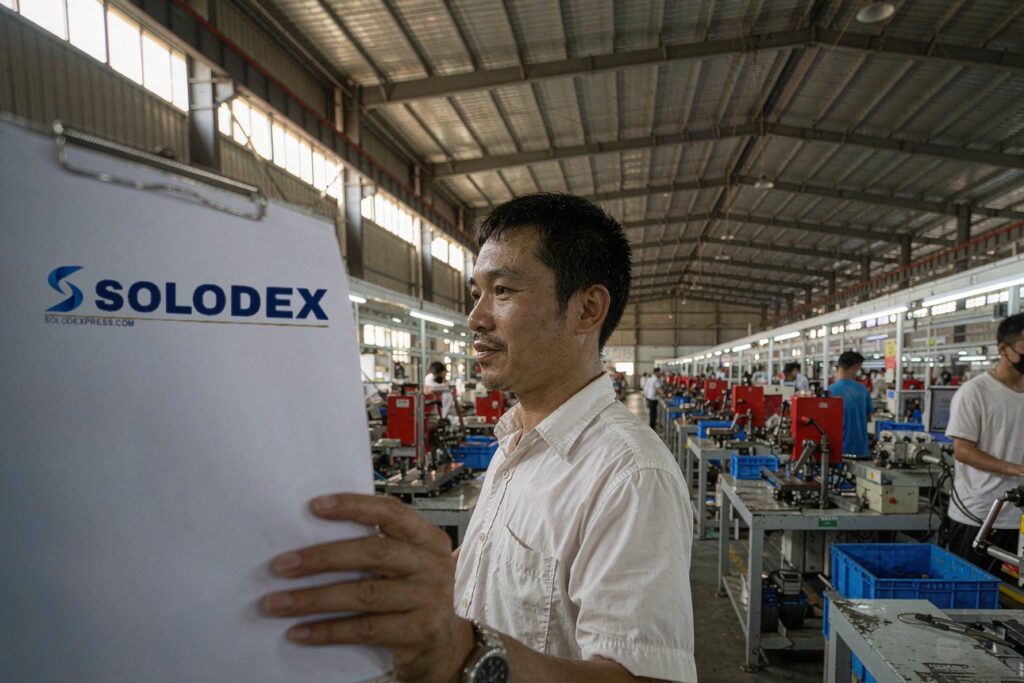
The audit report ran to forty-two pages. It scored the factory at eighty-seven out of a hundred, photographed the machine hall, listed the certifications, noted two minor findings about documentation and closed with a recommendation to proceed. Three months later the first production run came back with thirty per cent rejects on a cosmetic defect nobody had mentioned.
Nothing in the report was false. That is the uncomfortable part. The auditor went to a real factory, walked real lines, looked at real machines and wrote down what he saw on that day. The report is a record of a visit, and a visit is a sample of a moment — not a forecast of a production run.
Understanding what an audit can and cannot tell you is worth more than the score, because the score is the part everybody reads. Checking whether the document is genuine is a different exercise from reading what it actually covers, and most buyers do the first and skip the second.
Four fields that decide whether the report is about your order
Before the score, four fields on the cover and in the scope section determine whether the document is relevant at all.
The type of audit. Announced or unannounced. An announced audit shows a factory’s capacity to prepare; an unannounced one shows its ordinary state. Both are legitimate, and they answer different questions. A high score on an announced audit tells you the factory can clean up when told, which is a real skill and not the one you are buying.
The scope. Which building, which workshops, which production lines. A factory with four buildings and twelve lines can pass an audit conducted in the newest one. If your order will run in the old building, on line nine, the report describes somebody else’s factory.
The sampling. How many units were inspected, and from where. An auditor who checks five finished pieces from the end of a line has checked five pieces. That is not a defect rate; it is an impression. Reports usually say this honestly in a footnote that nobody reads.
The signatory. Who conducted the audit, who employed them, and who paid. The last one matters most and is rarely on the cover. When the buyer commissions and pays, the auditor is the buyer’s agent. When the factory pays for its own audit — common in social-compliance schemes — the incentive is not fraudulent, but it is not aligned either.
The address on the report is the thing to check first
The most common failure in this category is not a bad audit. It is a good audit of the wrong entity.
Trading companies routinely present a factory as “our partner factory”, and the audit is genuine: the partner factory exists, it is certified, it scores well. What the report does not establish is that your order will be produced there. The order may be subcontracted to a smaller plant the trader also uses, and that plant has never been visited by anyone.
The check takes one minute and is almost never done: compare the address and company name on the audit report with the address and company name on the quotation, the proforma invoice and the bank account. When all four match, the audit is about your supplier. When they diverge, the report is a brochure.
The same logic applies inside a single company. A group with several legal entities and several plants can hold a certificate in one entity’s name and produce in another’s. The drift that makes suppliers fail often starts exactly here — not with a collapse in quality, but with a quiet transfer of production to a site that was never in the file.
A finding is not a fact until it is closed
Audit reports list findings in three grades, and buyers read the count of major findings as a risk score. The more useful question is what happened next.
Every finding should generate a corrective action, a date, an owner and evidence of closure. Reports that end at the finding are half a document. A factory with four major findings and four closed corrective actions is in better shape than one with a single open finding that has been carried forward for three cycles — because the first shows a working system and the second shows a system that produces paperwork.
Ask for the closure evidence, not the summary. In practice this means the photographs, the revised procedure, the training record or the re-test that the factory submitted, plus the auditor’s verification of it. If the supplier cannot produce that, the finding is still open regardless of what the summary page says.
There is a second-order version of the same issue. An audit is a snapshot of a system, and systems decay between visits. The certificate is valid for a period; the factory is valid for a day. The gap between the two is where most quality failures live, which is why the pre-shipment inspection exists as a separate instrument — it checks the goods, not the system, and it checks them at the only moment that matters for that shipment.
The camera shows what it is pointed at
Remote and video audits became normal for reasons that had nothing to do with their merits, and they have stayed because they are cheap. They are also the purest version of the problem in this article: a video call is a visit to the parts of the factory that somebody chose to walk through with a camera in their hand.
What a remote audit does well is administrative. Documents can be shown, records can be sampled, a manager can be interviewed, and the whole thing can be repeated for a fraction of the cost of flying somebody out. What it cannot do is see the rest of the site — the building next door, the line that is idle, the dormitory, the subcontractor’s workshop three kilometres away that is doing the actual work.
There is a tell worth watching for. A remote audit that never shows a continuous shot of a walk from the gate to the production floor is a montage, not an inspection. The single unbroken take is the only part of a video audit that carries the same evidentiary weight as being there, and it is the part most easily omitted.
The practical compromise is to use remote audits for what they are good at — document checks, follow-ups on closed findings, routine surveillance — and to keep at least one physical visit for the moment that matters, which is before the first order rather than after it. The instrument is fine. It just cannot be the only instrument.
What an audit costs, and what it saves
The arithmetic is lopsided in a way that makes the decision easy and the execution careless. A third-party factory audit costs a few hundred dollars. A rejected first production run costs thousands in rework, plus the freight, plus the season.
Which means the audit is nearly always worth doing and almost always done at the wrong time. Commissioned after the order is placed, it becomes a confirmation exercise: the buyer has already committed, the factory knows the order exists, and the audit’s real function — deciding whether to place the order — has been overtaken.
Commissioned before the order, it changes what the buyer can negotiate. Findings become conditions: line nine rather than the new building, a named production manager, a pre-production sample from the actual tooling, an unannounced follow-up at the buyer’s expense. None of these are available after the deposit has gone.
There is one more number worth putting beside the fee. The cost of auditing a second factory — the one you did not choose — is the same few hundred dollars, and it is the only way to know whether the first one is good or merely available. Buyers who audit one supplier are not comparing; they are documenting a decision they have already made.
Six report types, and what each one can carry
The table separates the instruments, because they are routinely treated as interchangeable and they are not.
| Document | What it establishes | What it cannot establish | When it goes stale |
|---|---|---|---|
| Announced factory audit | The factory can meet a defined standard when prepared | Its ordinary daily state | When the line, the building or the owner changes |
| Unannounced audit | The ordinary state on one day | That the day was ordinary | Quickly; it is a single sample |
| Social compliance certificate | Labour conditions against a scheme’s standard | Product quality or capacity | At the certificate’s expiry, or on a change of site |
| Pre-shipment inspection | The goods in this shipment, by sample | Anything about the next shipment | Immediately; it is per consignment |
| Product test report | The tested sample against a standard | That production units are identical | On any change of material, tooling or plant |
| Supplier questionnaire | What the supplier says about itself | Anything at all, until verified | It does not go stale; it was never fresh |
Read the third column as a list of things buyers assume they have bought. The pattern is that every instrument answers a narrow question and the file is treated as if it answered the wide one. A factory audit says nothing about the goods; an inspection says nothing about the system; a test report says nothing about the next batch. Together they cover most of the ground — separately, each one is a single frame.
The long pole is timing, and it is the only variable the buyer fully controls. An audit done before the order is a decision tool. An audit done after the order is a receipt. The same document, the same fee, and a completely different value — which is why the useful question is not “do we have an audit” but “what did we do differently because of it”. The file comparison across markets covers which documents each regime requires; this one covers what a document can actually carry.
Audits are not guarantees and they are not theatre. They are photographs of a factory at a moment, taken by someone with an incentive, for a purpose the buyer chooses. The failure is not that the photograph lies. It is that buyers frame it and call it a forecast — and then discover, one production run later, that the first order was the only real test they ran.
The other half of the same problem is the sample: what a sample proves is a capability, not the run that follows it.
Auditing the packing line explains why one consignment arrives as cartons of different sizes, which then determines how it can be collected; see what a factory audit proves.


